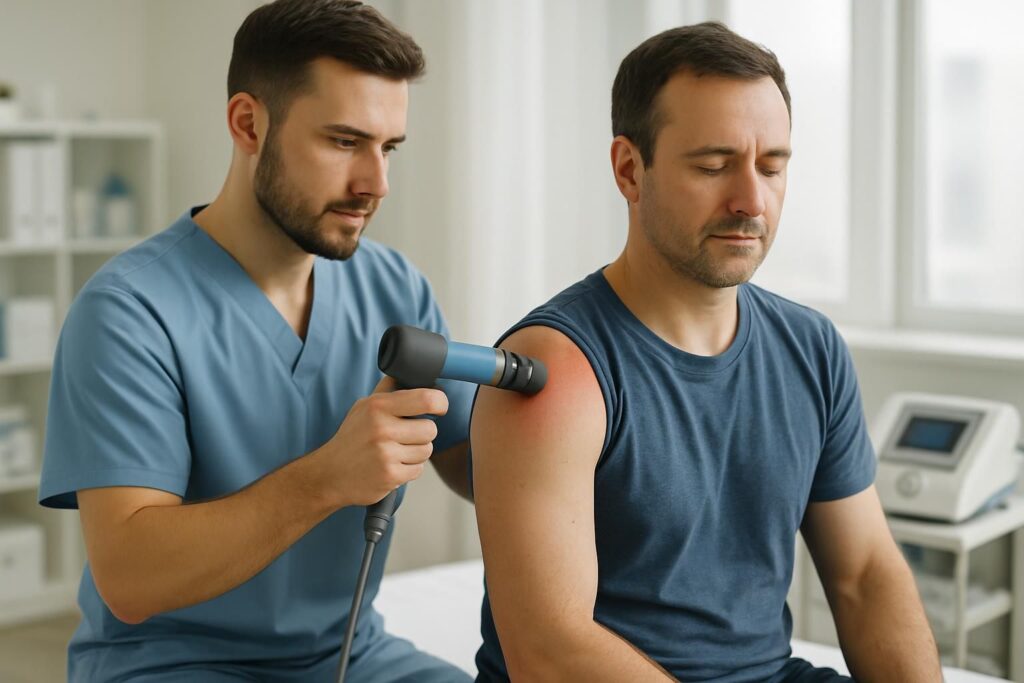
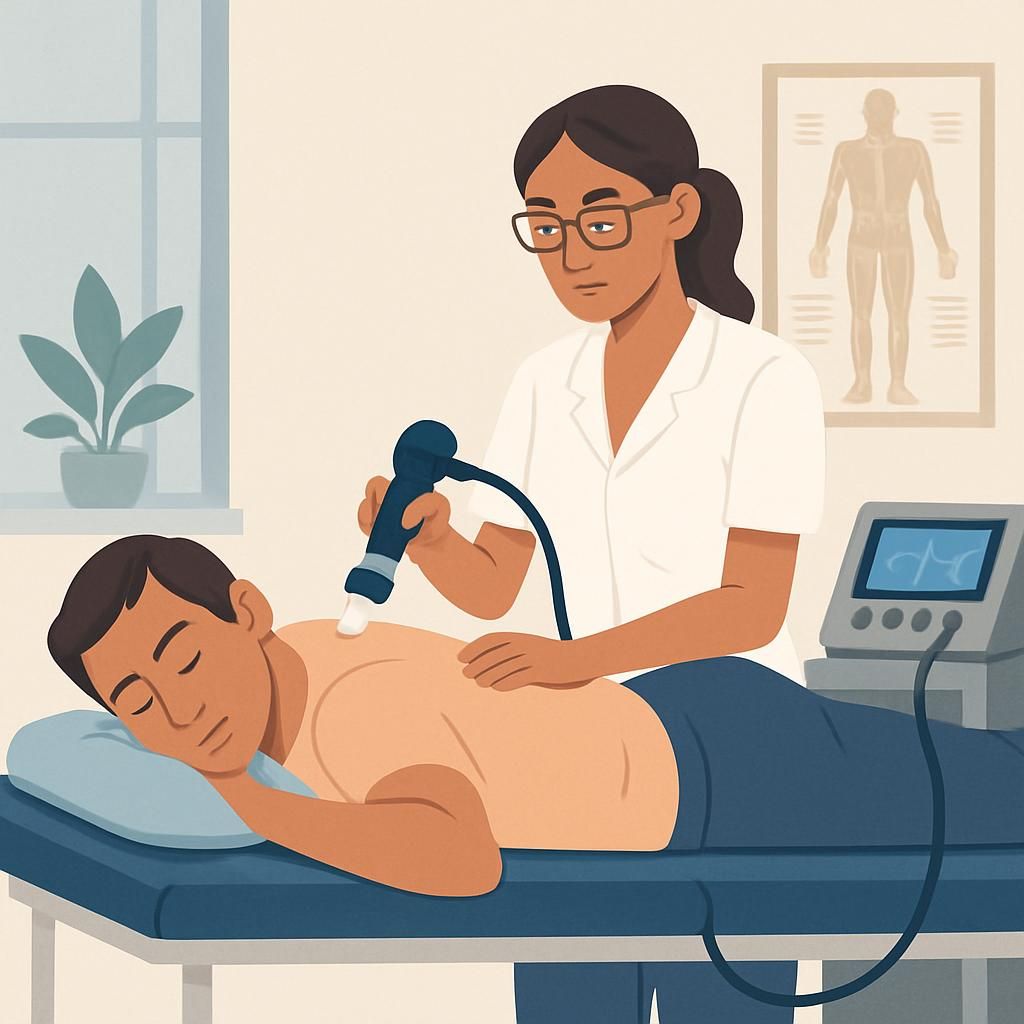
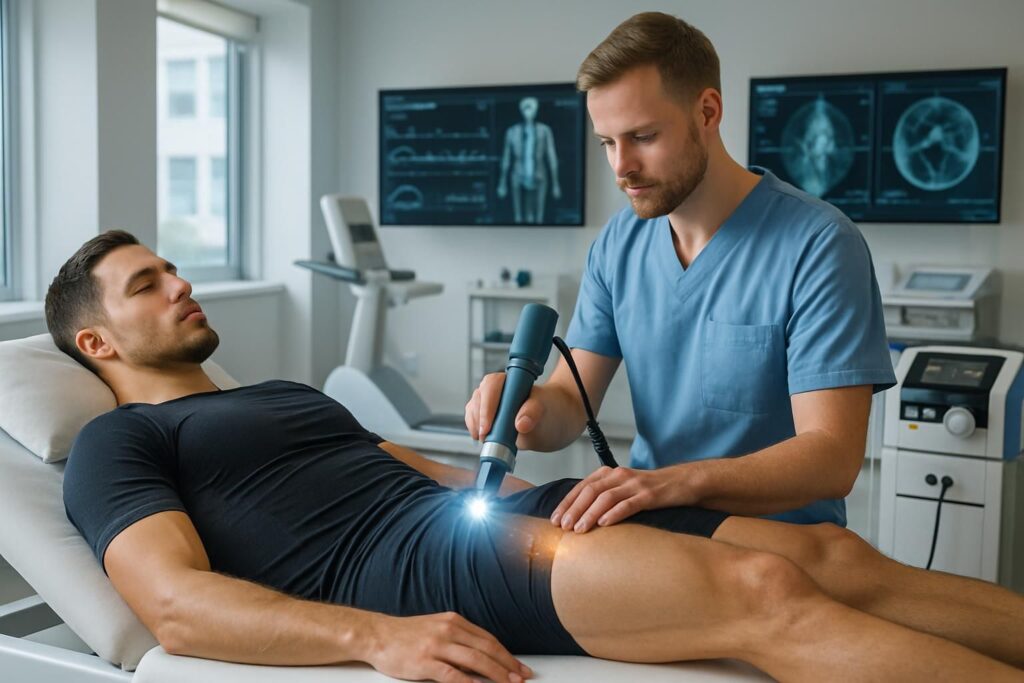
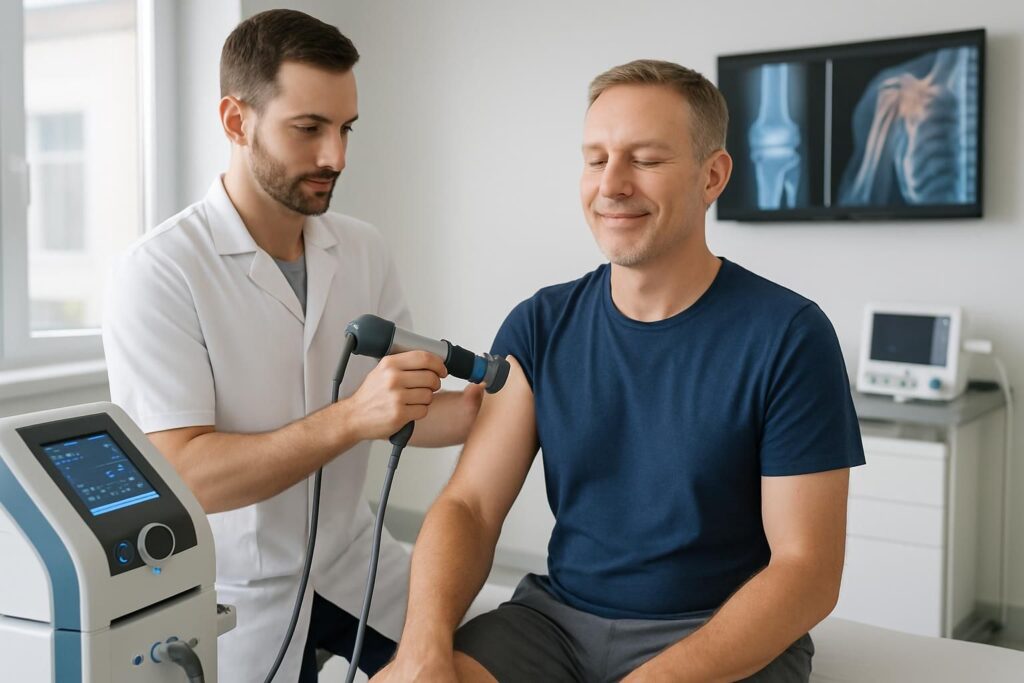
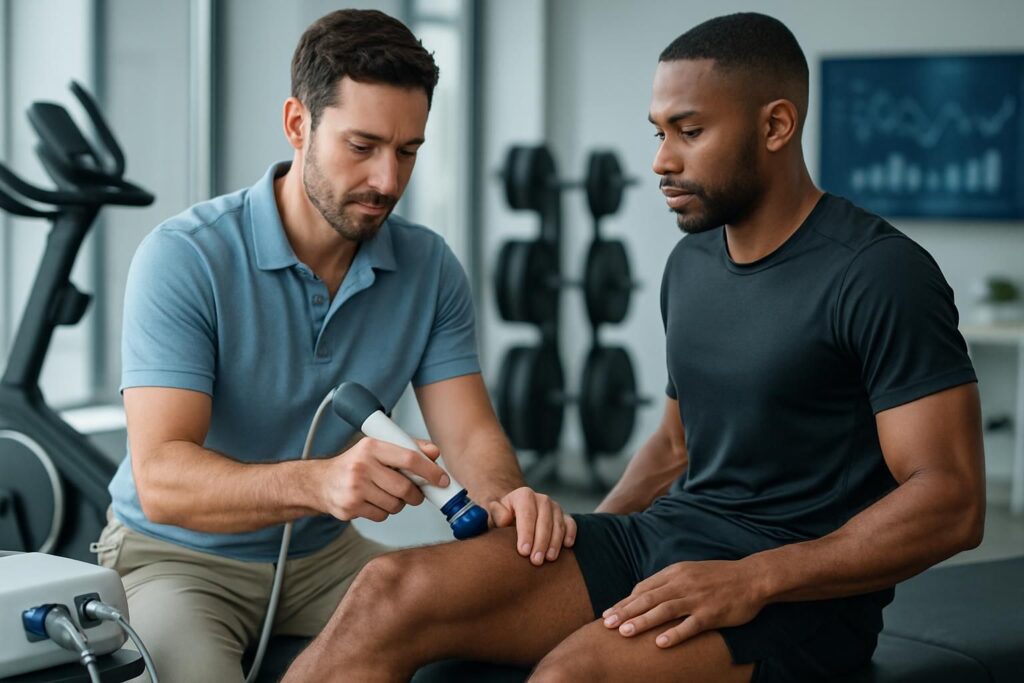
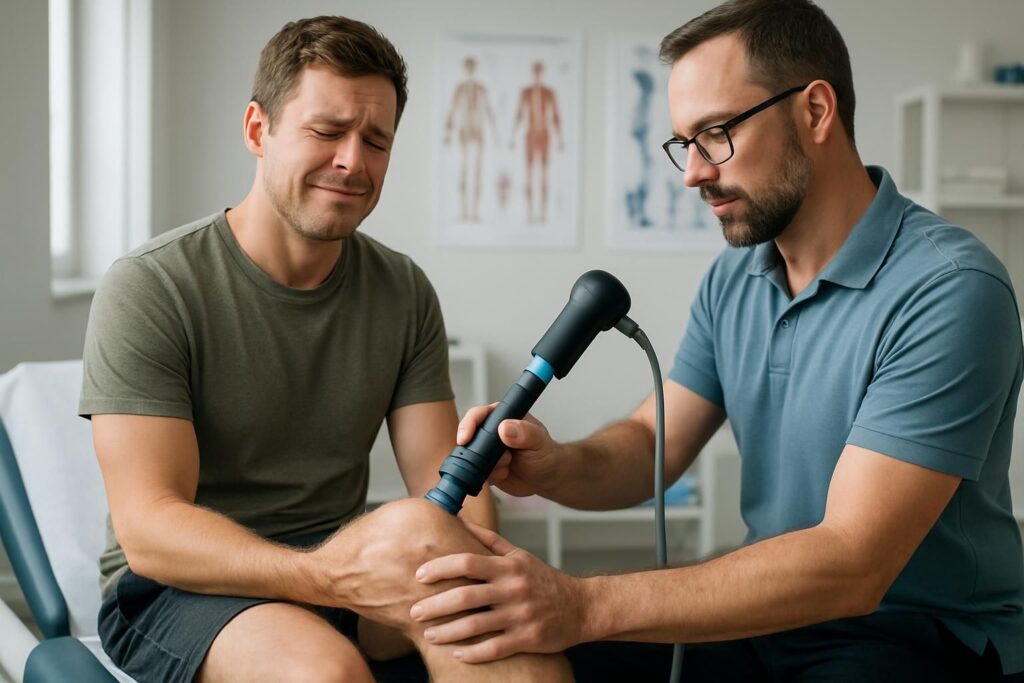
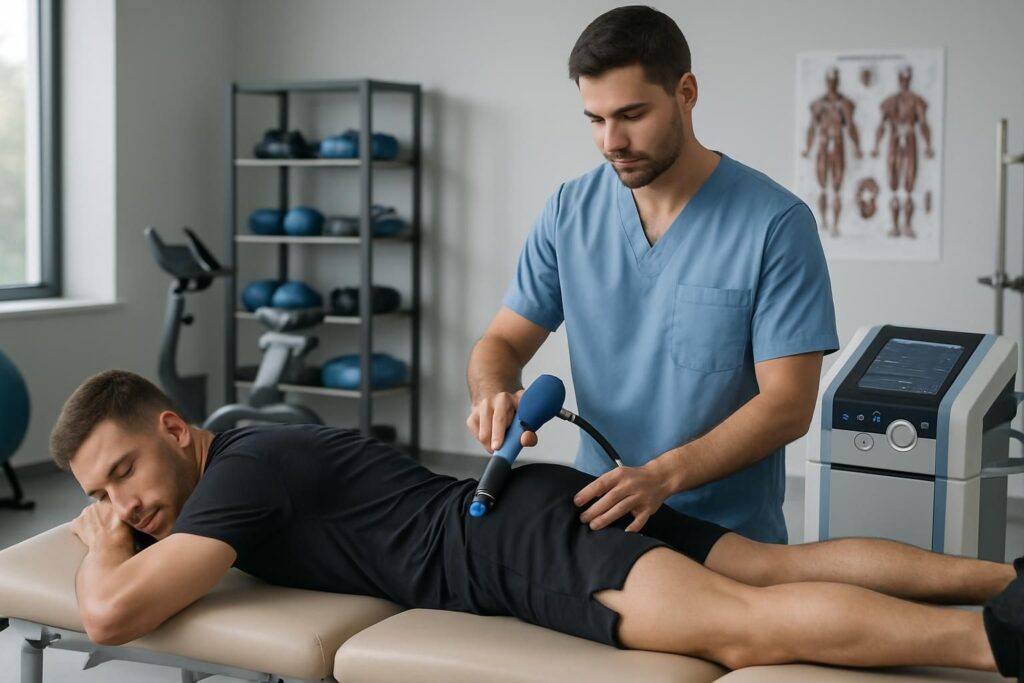
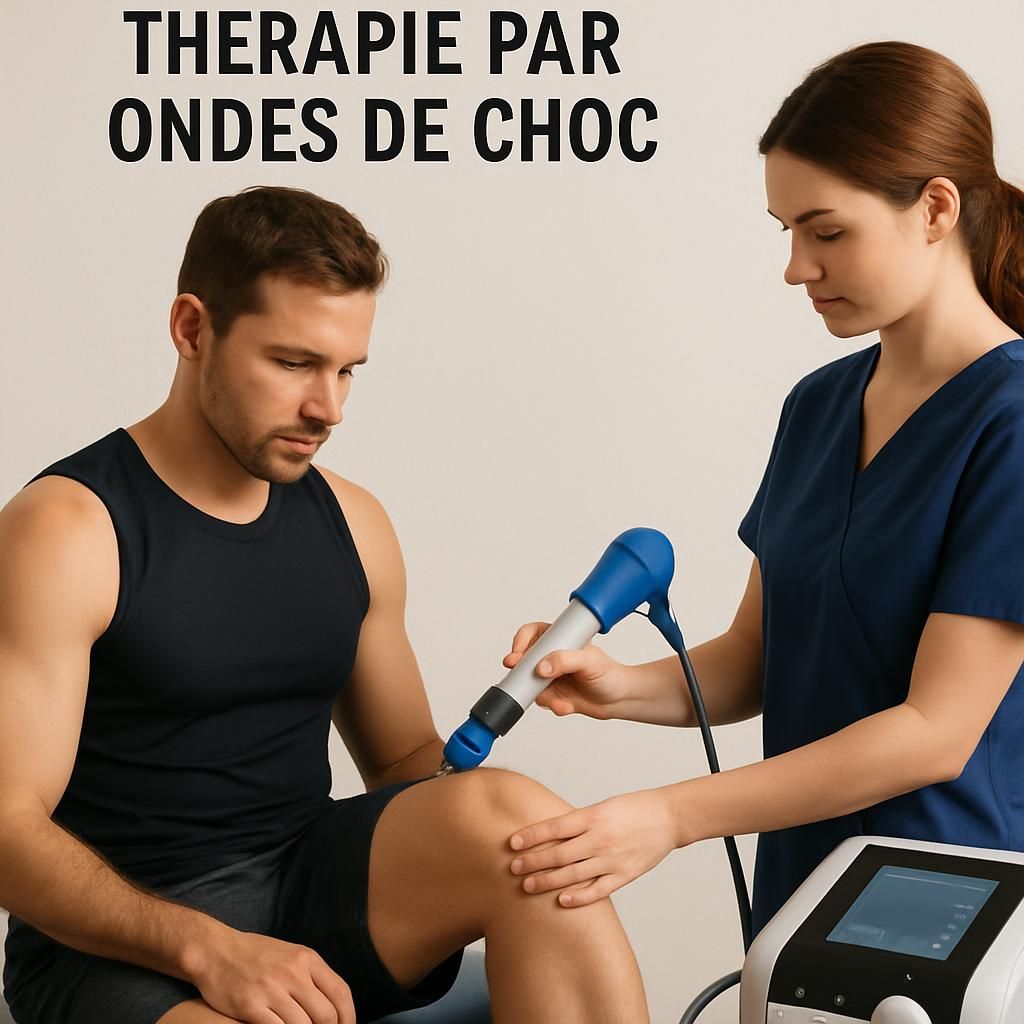
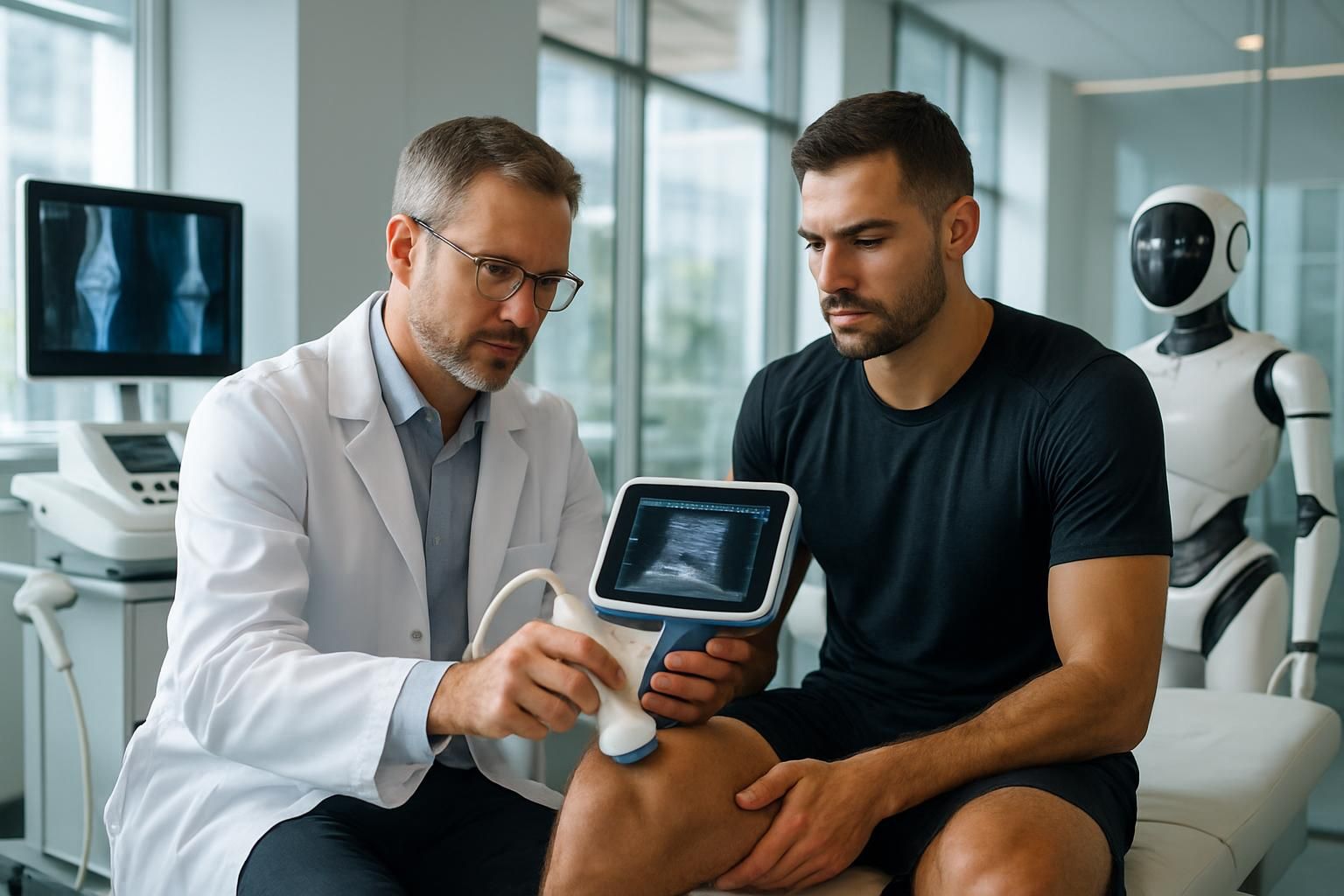
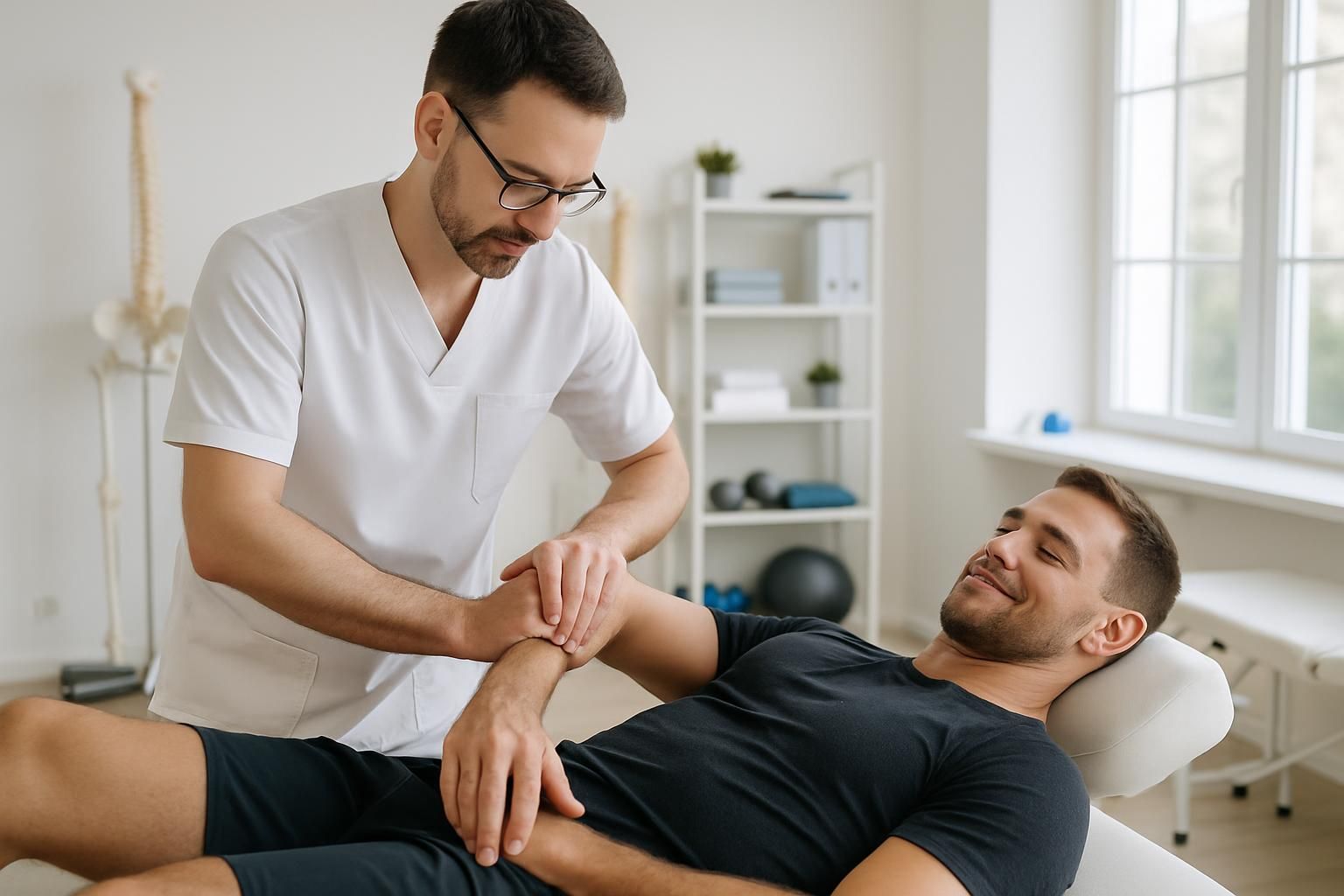
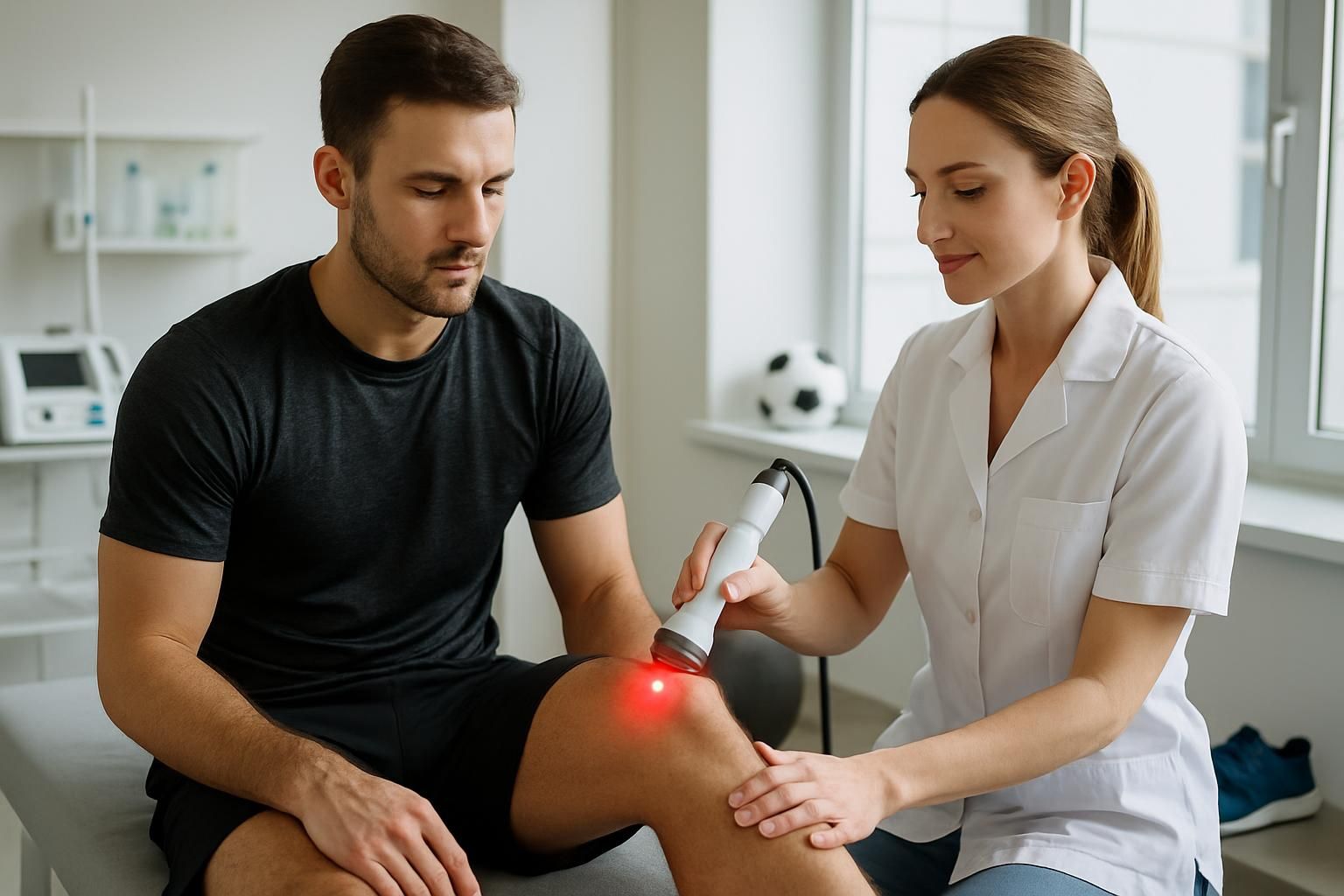
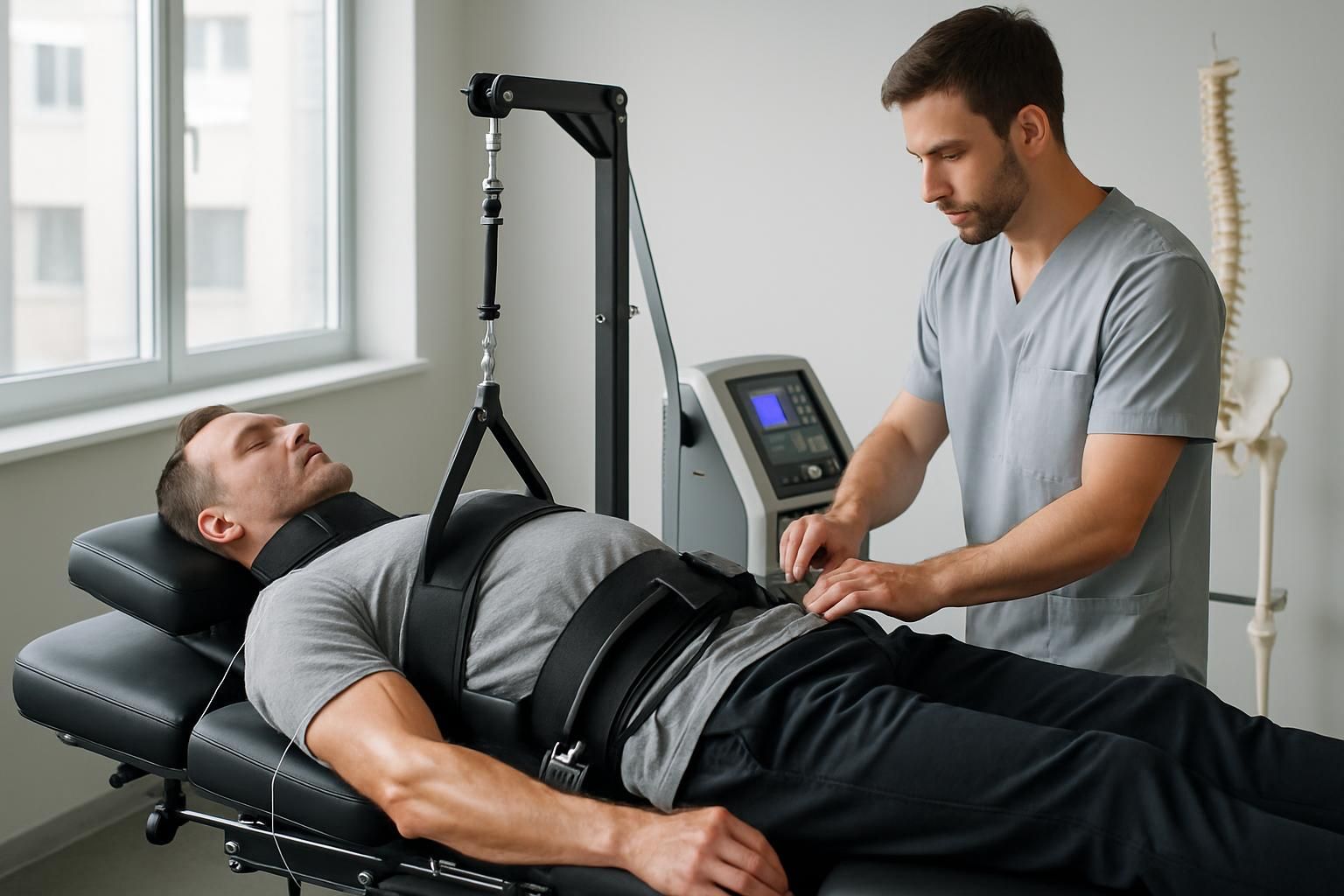
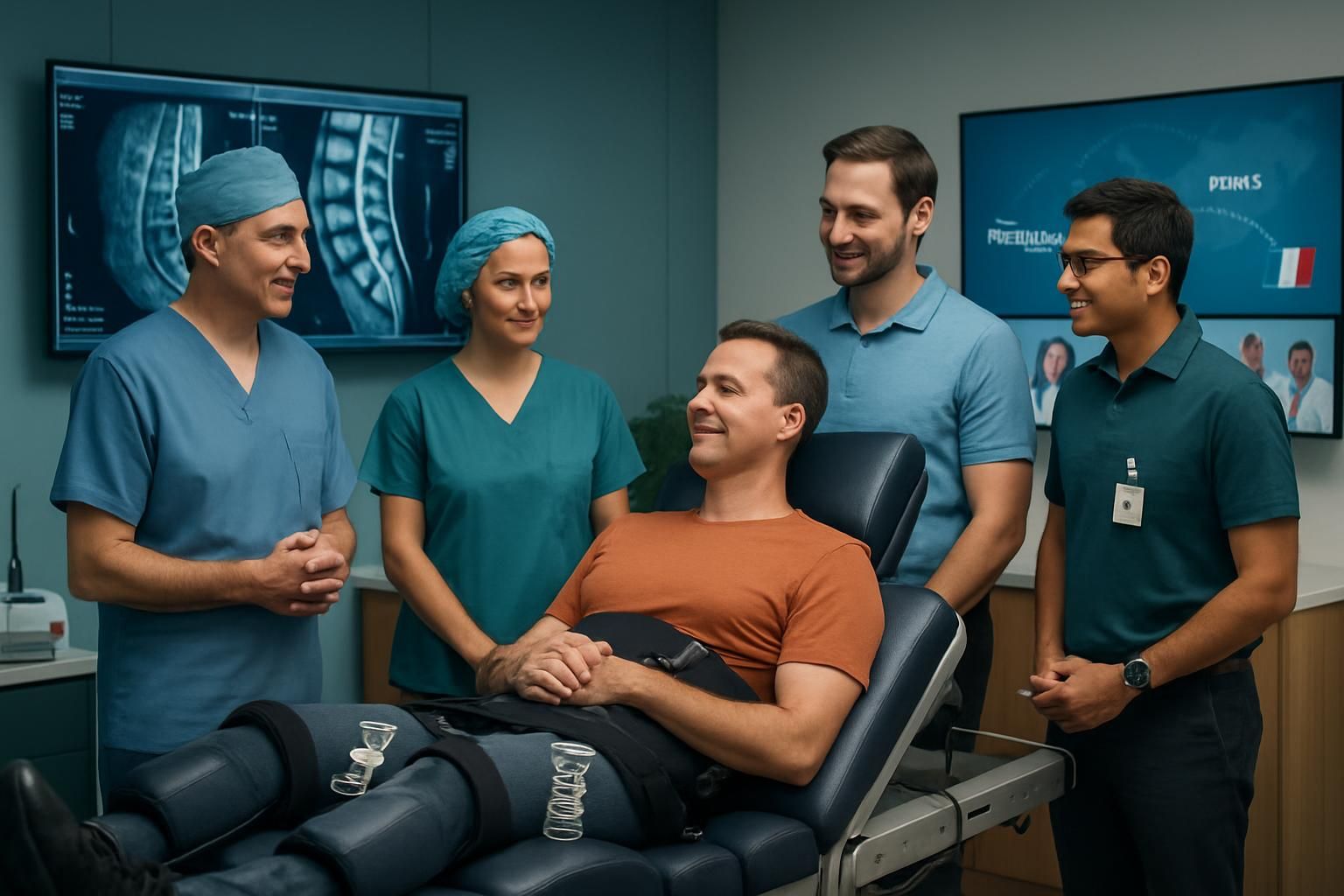
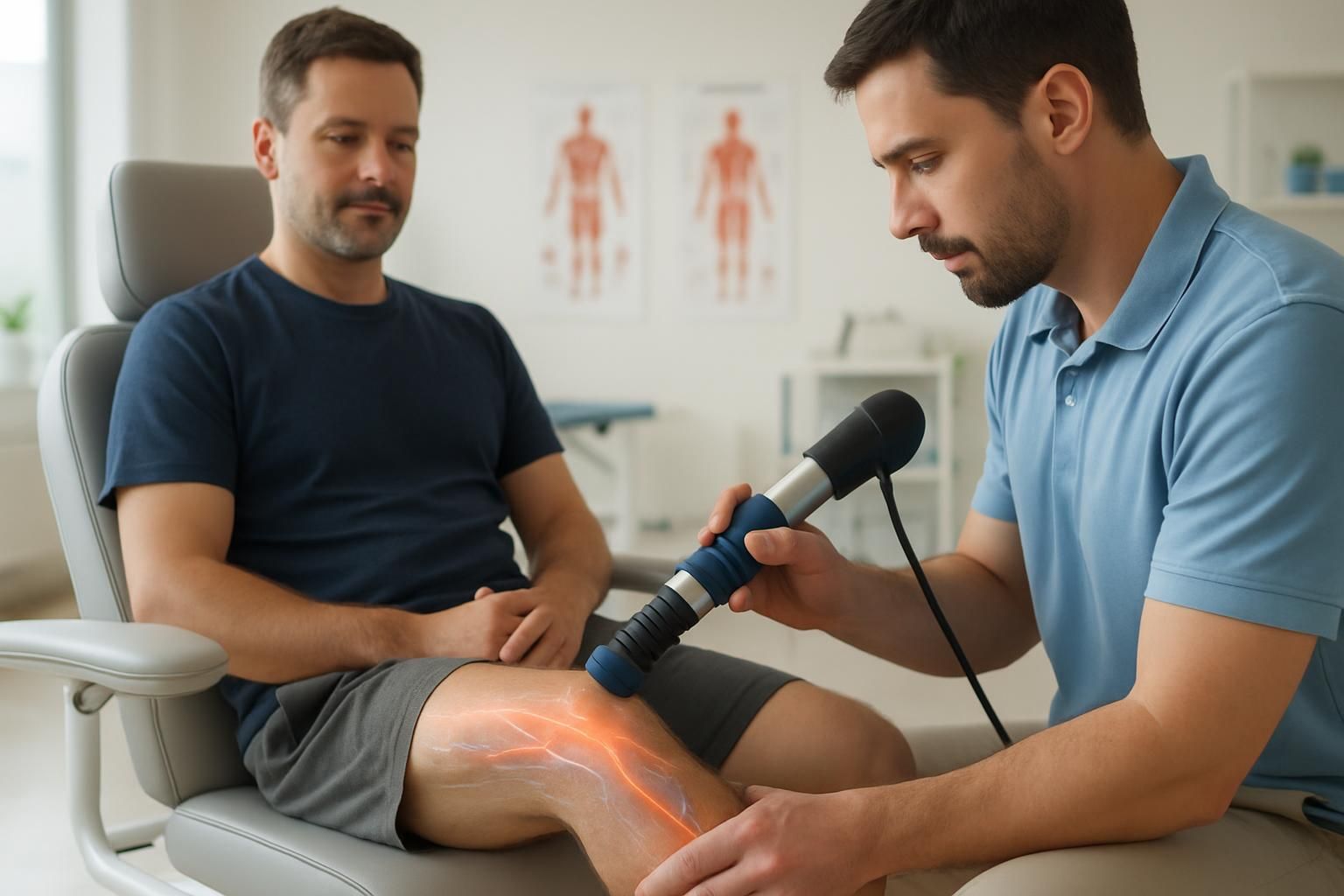
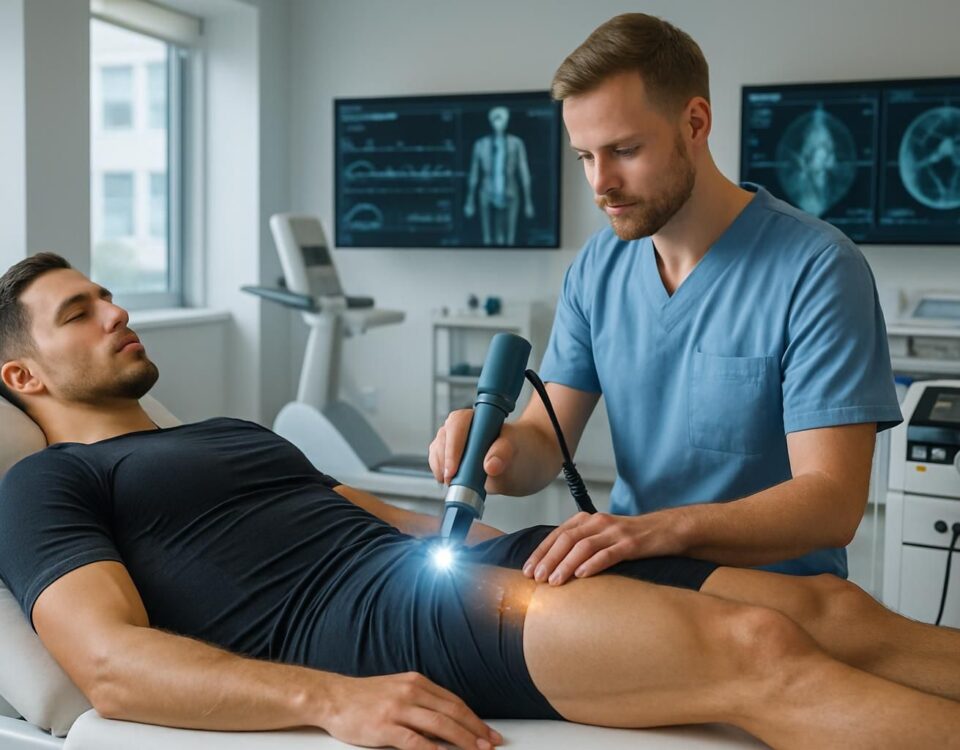
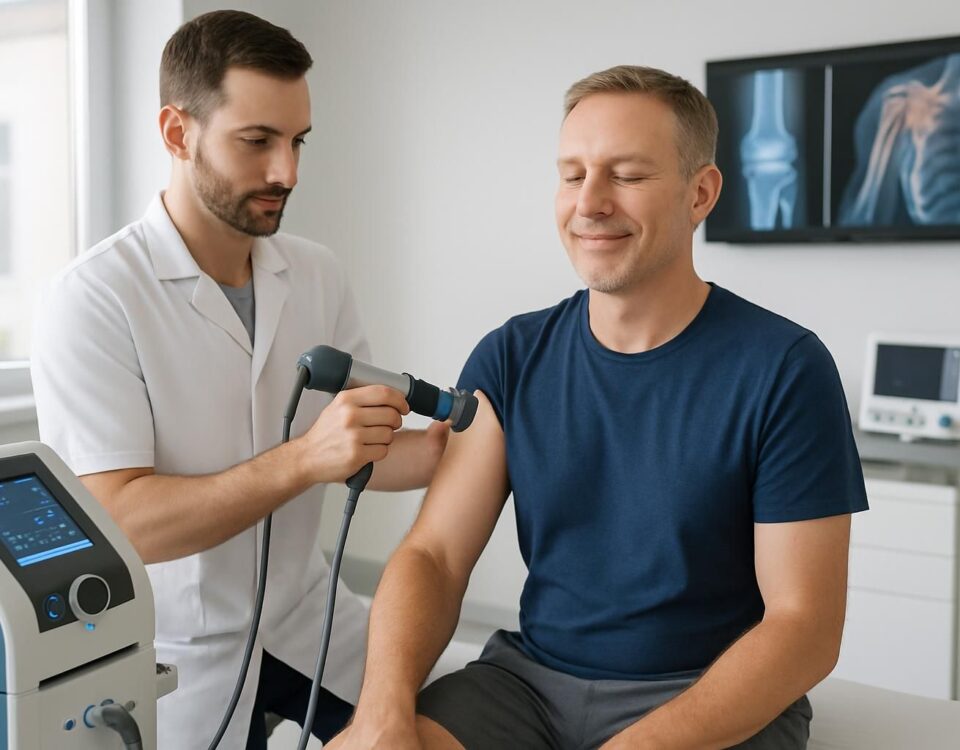
Découvrez notre podcast « Traitement des Blessures Sportives par la Thérapie de Shockwave » sur blessures-sportives.com, un rendez-vous audio dédié aux approches innovantes pour traiter les lésions sportives. […]
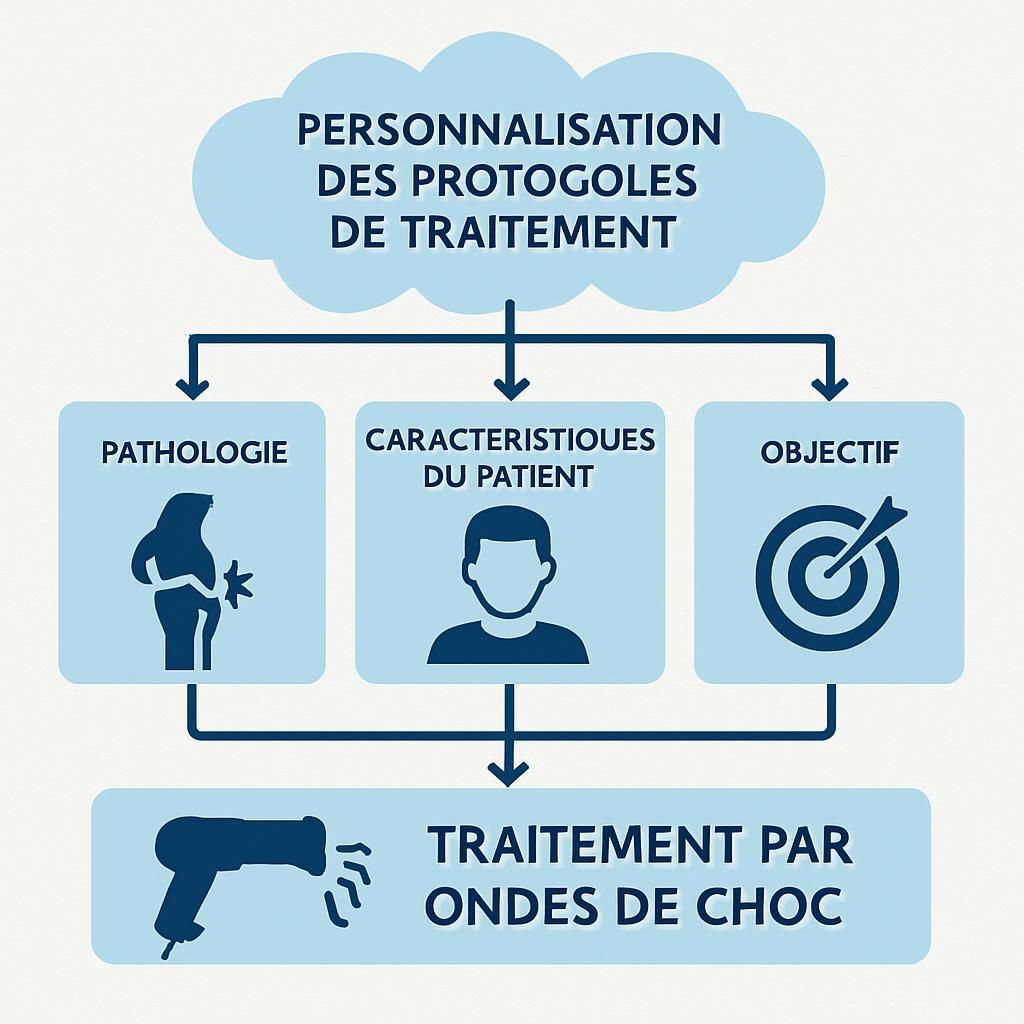
La thérapie par ondes de choc, également connue sous le nom de shockwave therapy, est une méthode innovante et non invasive qui a fait ses preuves dans le traitement des blessures aiguës. En dehors des méthodes traditionnelles de réhabilitation, les approches personnalisées apportent une valeur ajoutée en adaptant les traitements à chaque patient. En tenant compte des caractéristiques uniques de chaque blessure, cette approche optimise la gestion de la douleur et accélère la récupération. En 2026, le recours à ces méthodes personnalisées en médecine régénérative est plus que jamais une nécessité.
Lorsque l’on parle de blessures aiguës, il est essentiel de comprendre que chaque situation est différente. Qu’il s’agisse d’une déchirure musculaire, d’une entorse ou d’une tendinite, le corps réagit de manière distincte. Les soins apportés doivent donc être adaptés en fonction de divers facteurs tels que l’âge du patient, son niveau d’activité physique, et son historique médical. La thérapie par ondes de choc, en stimulant la réparation tissulaire, se montre particulièrement efficace dans ce cadre. Une étude récente a démontré que 85% des patients traités pour des douleurs aiguës grâce à la thérapie par ondes de choc ont constaté une amélioration significative de leur condition.
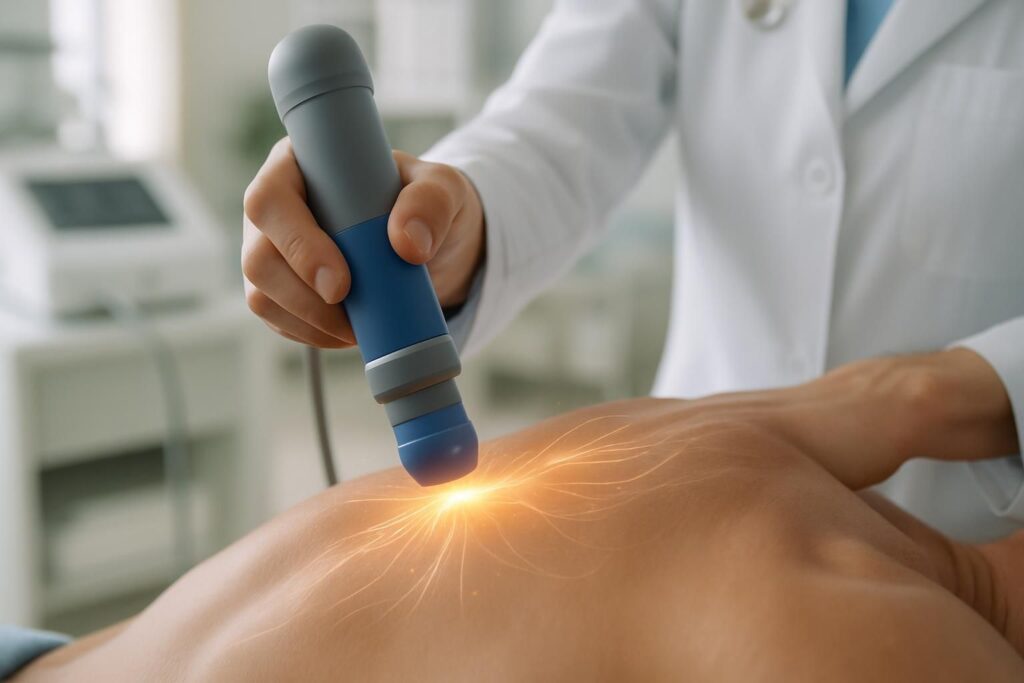
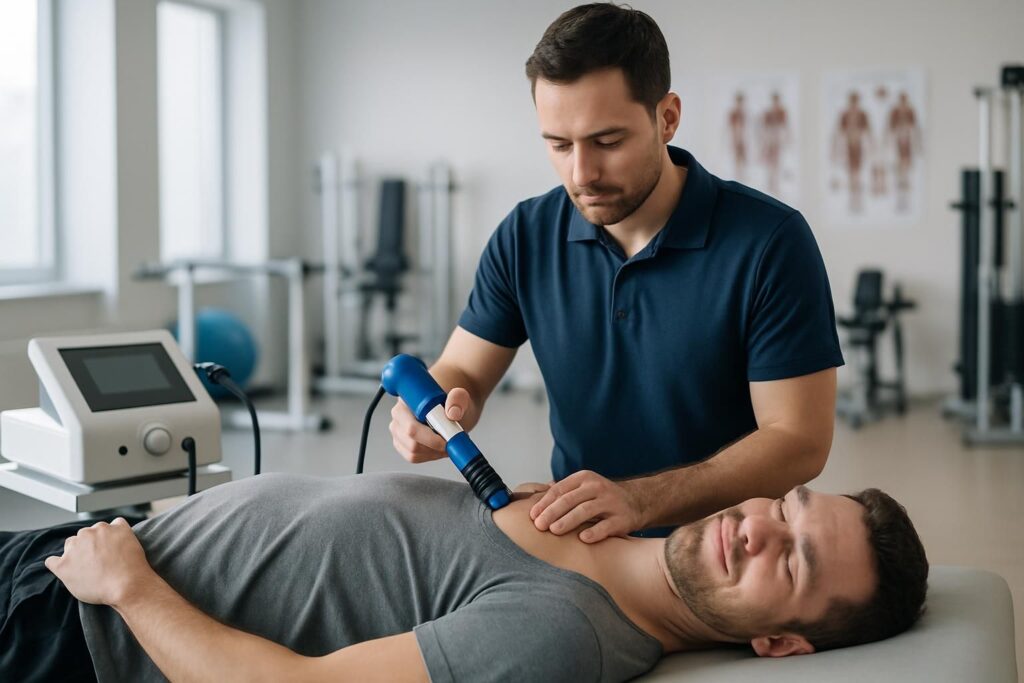
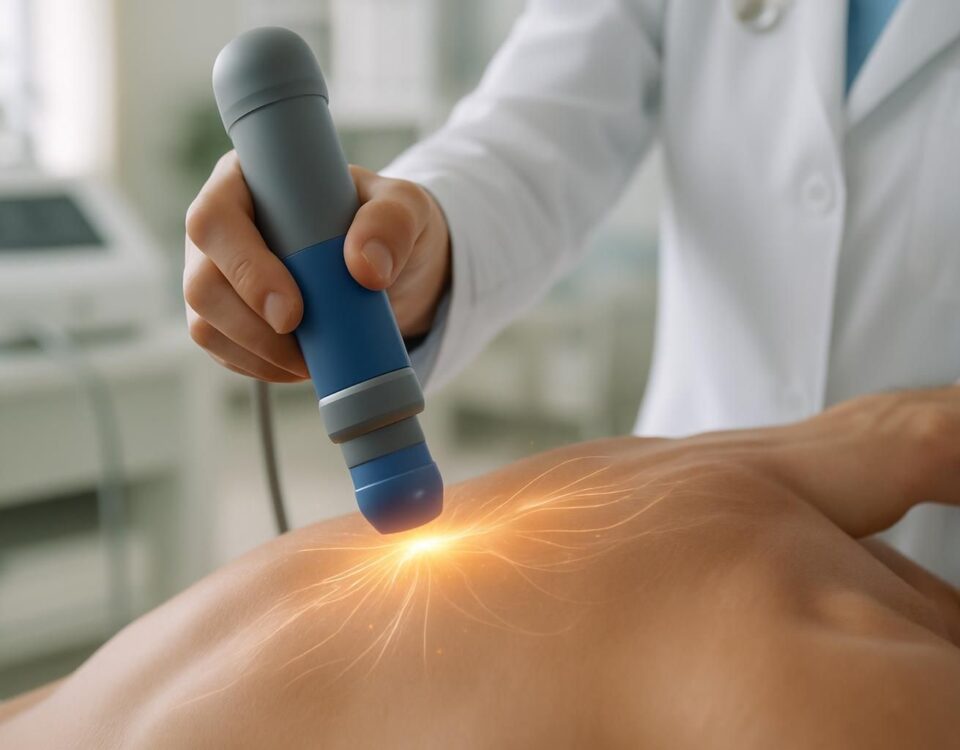
Le traitement par ondes de choc vise à stimuler les mécanismes de guérison naturels du corps. L’application d’ondes acoustiques à haute énergie permet de provoquer des microtraumatismes au niveau des tissus endommagés, ce qui réveille le processus de régénération. Ces microtraumatismes sont essentiels, car ils entraînent une réponse inflammatoire contrôlée , favorisant ainsi une meilleure circulation sanguine dans la zone affectée. Ce phénomène stimule la réparation tissulaire , occlus une douleur aiguë et contribue à une résorption des calcifications. Les résultats montrent que cette méthode peut réduire la douleur jusqu’à 70% dans certains cas de blessures aiguës.
En matière d’approche personnalisée, il est fondamentale de maintenir une communication constante entre le thérapeute et le patient. Grâce à cela, les objectifs de traitement peuvent être ajustés, ce qui garantit que chaque patient puisse tirer le meilleur parti de la thérapie. Par exemple, pour un athlète qui a subi une entorse, il est crucial d’intégrer des exercices spécifiques de manière progressive en parallèle de la thérapie par ondes de choc, assurant ainsi une rééducation complète.
Le succès du traitement passe par une évaluation rigoureuse avant et après chaque séance de thérapie par ondes de choc. Ce suivi, associé à une réflexion critique sur l’évolution des douleurs et des capacités fonctionnelles, permet d’ajuster les protocoles de manière pertinente. Un tableau d’évaluation peut intégrer des indicateurs comme le niveau de douleur perçu, la mobilité, et la capacité à réaliser des mouvements fonctionnels.
Indicateurs Mesure Fréquence d’évaluation Niveau de douleur (Échelle de 0 à 10) 0-10 Avant et après chaque séance Amplitude de mouvement Degrés Hebdomadaire Fonctionnalité (test de performance) Évaluation qualitative Mensuelle
L’adaptation de la thérapie par ondes de choc passe par une personnalisation des paramètres de traitement, notamment en matière d’énergie et de fréquence des impulsions. Les praticiens ajustent ces paramètres en fonction de l’évolution des signes cliniques et des retours du patient. Par conséquent, ces approches personnalisées contribuent fortement à la réduction des douleurs et à l’accélération de la guérison.
La thérapie par ondes de choc est particulièrement efficace pour plusieurs types de blessures aiguës, notamment :
Tendinopathie du tendon d’Achille :Épicondylite : Une condition fréquente chez les sportifs, qui est soulagée grâce aux effets anti-inflammatoires de la thérapie.Fasciite plantaire :Douleurs lombaires : En activant les mécanismes de guérison, cette méthode permet de traiter efficacement les douleurs dues aux blessures aiguës.Chacune de ces conditions présente des caractéristiques uniques qui requièrent une approche échue en fonction des besoins de chaque patient. Au-delà de la thérapie par ondes de choc, l’intégration de techniques complémentaires, comme l’exercice thérapeutique, augmente l’efficacité du traitement et aide les patients à retrouver rapidement leur fonctionnalité.
Approches intégrées en shockwave pour optimiser le retour à l’effort
Pourquoi les approches intégrées en shockwave sont essentielles pour la réhabilitation sportive Dans le monde du sport et de la médecine physique, l’importance des approches intégrées en shockwave est de plus en plus reconnue. Ces méthodes innovantes combinent la thérapie…
Les retours d’expérience des thérapeutes et des patients sont cruciaux pour évaluer l’efficacité de la thérapie par ondes de choc. Dans des études cliniques récentes, la majorité des patients ayant subi ce traitement pour des blessures aiguës ont signalé une amélioration significative de leur condition après plusieurs séances. Un retour positif d’environ 80% a été enregistré dans les deux mois suivant le début du traitement, avec une majorité de patients ressentant une réduction de la douleur et une amélioration de la mobilité.
Certaines études spécifiques démontrent des résultats probants, par exemple, des athlètes ayant subi des blessures aiguës au niveau du tendon d’Achille et ayant constaté une amélioration de leur performance après quelques séances de thérapie par ondes de choc. Ces résultats sont corroborés par des données objectives, comme l’augmentation mesurée de l’amplitude de mouvement et la diminution des scores de douleur.
L’intégration de la thérapie par ondes de choc dans la réhabilitation fonctionnelle s’avère d’ailleurs très bénéfique en améliorant la circulation sanguine dans la zone touchée, tout en optimisant un temps de guérison souvent réduit.
Les approches personnalisées en matière de thérapie par ondes de choc offrent aux patients des options de traitement sur mesure, capables de s’adapter aux spécificités de chaque blessure. Ces traitements conventions ont prouvé leur efficacité dans le cadre de la réhabilitation fonctionnelle, contribuant ainsi à une meilleure qualité de vie pour les patients. En 2026, il est donc essentiel que les professionnels de santé continuent d’explorer et d’optimiser ces méthodes pour garantir un bien-être durable et une récupération rapide après des blessures aiguës.
Qu’est-ce que la thérapie par ondes de choc ?
C’est une méthode non invasive qui utilise des ondes acoustiques à haute énergie pour stimuler la guérison des tissus endommagés.
Existe-t-il des protocoles standard pour ce traitement ?
Les protocoles varient en fonction de la nature de la blessure, mais ils sont généralement établis sur des données probantes issues de recherches cliniques.
Quels retours d’expérience observe-t-on chez les patients traités par cette technique ?
La plupart des patients rapportent une réduction notable de la douleur et une amélioration durable de la fonction, leur permettant de reprendre leurs activités sportives.
La procédure est-elle douloureuse ?
VIDEO
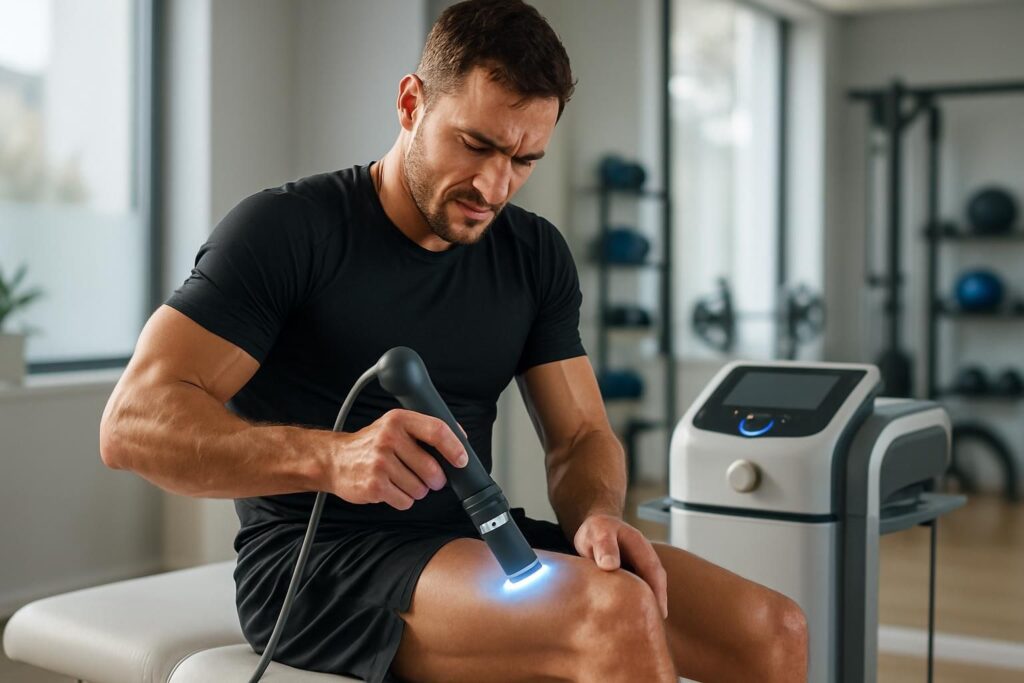
La plupart des patients la trouvent tolérable, avec une sensation de picotement ou une gêne légère pendant l’application des ondes.
La procédure est-elle compatible avec un suivi médical régulier ?
Oui, la thérapie par ondes de choc peut être intégrée dans un plan de suivi médical pour surveiller l’évolution de la guérison et ajuster le traitement si nécessaire.
Peut-on considérer cette thérapie comme une alternative à la chirurgie ?
Pour de nombreux cas, elle constitue une alternative non invasive aux interventions chirurgicales en réduisant la douleur et en favorisant la guérison.
Peut-on observer des améliorations dès la première séance ?
Certaines personnes ressentent une amélioration dès la première séance, mais un traitement complet nécessite généralement plusieurs séances.
Quels effets secondaires peut-on observer ?
Les effets secondaires sont rares et peuvent inclure une rougeur temporaire, un léger gonflement ou une sensation de chaleur dans la zone traitée.
Quelle est la durée d’une séance typique ?
Une séance dure généralement entre 10 et 30 minutes, selon le protocole défini par le spécialiste.
Quels types de lésions sont traités par cette méthode ?
Elle est utilisée pour traiter les lésions tendineuses, les calcifications et les inflammations localisées résultant d’un traumatisme sportif.
Comment fonctionne la thérapie par ondes de choc ?
Elle agit en générant des ondes de choc qui créent de microtraumatismes contrôlés, favorisant ainsi la régénération cellulaire et la réduction de l’inflammation.
Peut-elle être utilisée pour traiter les tendinopathies ?
Absolument, elle est particulièrement efficace pour traiter les tendinopathies en stimulant la régénération des fibres tendineuses.
Quels sont les principaux indicateurs d’efficacité après le traitement ?
La diminution de la douleur, l’amélioration de la mobilité locale et la réduction de l’inflammation sont des indicateurs clés d’une réponse positive au traitement.
La thérapie par ondes de choc permet-elle de réduire l’inflammation ?
Oui, en stimulant la régénération cellulaire, elle aide à réduire l’inflammation au niveau des tissus endommagés.
La thérapie par ondes de choc est-elle adaptée aux sportifs de haut niveau ?
Oui, elle est fréquemment utilisée par des sportifs professionnels pour accélérer la récupération et minimiser le temps d’arrêt.
Les résultats sont-ils immédiats ?
Les effets peuvent être ressentis dès la première séance, bien que plusieurs séances soient souvent nécessaires pour obtenir des améliorations significatives.
Pour quelles blessures sportives est-elle indiquée ?
Elle est indiquée pour traiter les tendinopathies, calcifications, inflammations locales et autres lésions des tissus mous liées aux traumatismes sportifs.
Quels sont les bénéfices de la photobiomodulation dans ce traitement ?
La photobiomodulation permet d’influencer positivement les fonctions cellulaires, favorisant la réparation des tissus et réduisant la douleur de manière naturelle.
Quels sont les bénéfices de combiner la thérapie par ondes de choc avec d’autres approches non invasives ?
Cette combinaison permet d’optimiser la réduction de la douleur et de favoriser une meilleure restauration de la fonction des tissus affectés.
Quelles études soutiennent l’efficacité de cette thérapie ?
De nombreuses études cliniques démontrent que la thérapie par ondes de choc est efficace pour réduire la douleur et améliorer la fonction des tissus endommagés chez les sportifs.
Références 722490
7J2MREBC
1
apa
20
default
1
69818
https://www.blessures-sportives.com/wp-content/plugins/zotpress/
%7B%22status%22%3A%22success%22%2C%22updateneeded%22%3Afalse%2C%22instance%22%3Afalse%2C%22meta%22%3A%7B%22request_last%22%3A0%2C%22request_next%22%3A0%2C%22used_cache%22%3Atrue%7D%2C%22data%22%3A%5B%7B%22key%22%3A%22D3TINEN9%22%2C%22library%22%3A%7B%22id%22%3A722490%7D%2C%22meta%22%3A%7B%22creatorSummary%22%3A%22Hess%22%2C%22parsedDate%22%3A%222013%22%2C%22numChildren%22%3A1%7D%2C%22bib%22%3A%22%26lt%3Bdiv%20class%3D%26quot%3Bcsl-bib-body%26quot%3B%20style%3D%26quot%3Bline-height%3A%202%3B%20padding-left%3A%201em%3B%20text-indent%3A-1em%3B%26quot%3B%26gt%3B%5Cn%20%20%26lt%3Bdiv%20class%3D%26quot%3Bcsl-entry%26quot%3B%26gt%3BHess%2C%20D.%20%282013%29.%20%26lt%3Bi%26gt%3BDo%20physiotherapy%20students%20employ%20evidence-based%20practice%20in%20the%20management%20of%20musculoskeletal%20disorders%20and%20sports%20injuries%26lt%3B%5C%2Fi%26gt%3B.%20%26lt%3Ba%20class%3D%26%23039%3Bzp-ItemURL%26%23039%3B%20href%3D%26%23039%3Bhttps%3A%5C%2F%5C%2Fuwcscholar.uwc.ac.za%5C%2Fitems%5C%2F45255b15-670f-4fc0-93ac-e3db8f3a533c%26%23039%3B%26gt%3Bhttps%3A%5C%2F%5C%2Fuwcscholar.uwc.ac.za%5C%2Fitems%5C%2F45255b15-670f-4fc0-93ac-e3db8f3a533c%26lt%3B%5C%2Fa%26gt%3B%26lt%3B%5C%2Fdiv%26gt%3B%5Cn%26lt%3B%5C%2Fdiv%26gt%3B%22%2C%22data%22%3A%7B%22itemType%22%3A%22journalArticle%22%2C%22title%22%3A%22Do%20physiotherapy%20students%20employ%20evidence-based%20practice%20in%20the%20management%20of%20musculoskeletal%20disorders%20and%20sports%20injuries%22%2C%22creators%22%3A%5B%7B%22creatorType%22%3A%22author%22%2C%22firstName%22%3A%22Danelle%22%2C%22lastName%22%3A%22Hess%22%7D%5D%2C%22abstractNote%22%3A%22%22%2C%22date%22%3A%222013%22%2C%22language%22%3A%22%22%2C%22DOI%22%3A%22%22%2C%22ISSN%22%3A%22%22%2C%22url%22%3A%22https%3A%5C%2F%5C%2Fuwcscholar.uwc.ac.za%5C%2Fitems%5C%2F45255b15-670f-4fc0-93ac-e3db8f3a533c%22%2C%22collections%22%3A%5B%227J2MREBC%22%5D%2C%22dateModified%22%3A%222025-03-06T21%3A11%3A19Z%22%7D%7D%2C%7B%22key%22%3A%22SS2DCGBA%22%2C%22library%22%3A%7B%22id%22%3A722490%7D%2C%22meta%22%3A%7B%22creatorSummary%22%3A%22Lohrer%20and%20Nauck%22%2C%22parsedDate%22%3A%222018%22%2C%22numChildren%22%3A1%7D%2C%22bib%22%3A%22%26lt%3Bdiv%20class%3D%26quot%3Bcsl-bib-body%26quot%3B%20style%3D%26quot%3Bline-height%3A%202%3B%20padding-left%3A%201em%3B%20text-indent%3A-1em%3B%26quot%3B%26gt%3B%5Cn%20%20%26lt%3Bdiv%20class%3D%26quot%3Bcsl-entry%26quot%3B%26gt%3BLohrer%2C%20H.%2C%20%26amp%3B%20Nauck%2C%20T.%20%282018%29.%20%26lt%3Bi%26gt%3BShock%20waves%20in%20sports%20medicine%26lt%3B%5C%2Fi%26gt%3B.%20Level10.%20%26lt%3Ba%20class%3D%26%23039%3Bzp-ItemURL%26%23039%3B%20href%3D%26%23039%3Bhttp%3A%5C%2F%5C%2Fwww.level-buecher.de%5C%2Fimages%5C%2Fvorschau_pdf%5C%2FBuch_07_EN_Blick_ins_Buch.pdf%26%23039%3B%26gt%3Bhttp%3A%5C%2F%5C%2Fwww.level-buecher.de%5C%2Fimages%5C%2Fvorschau_pdf%5C%2FBuch_07_EN_Blick_ins_Buch.pdf%26lt%3B%5C%2Fa%26gt%3B%26lt%3B%5C%2Fdiv%26gt%3B%5Cn%26lt%3B%5C%2Fdiv%26gt%3B%22%2C%22data%22%3A%7B%22itemType%22%3A%22book%22%2C%22title%22%3A%22Shock%20waves%20in%20sports%20medicine%22%2C%22creators%22%3A%5B%7B%22creatorType%22%3A%22author%22%2C%22firstName%22%3A%22Heinz%22%2C%22lastName%22%3A%22Lohrer%22%7D%2C%7B%22creatorType%22%3A%22author%22%2C%22firstName%22%3A%22Tanja%22%2C%22lastName%22%3A%22Nauck%22%7D%5D%2C%22abstractNote%22%3A%22%22%2C%22date%22%3A%222018%22%2C%22language%22%3A%22%22%2C%22ISBN%22%3A%22%22%2C%22url%22%3A%22http%3A%5C%2F%5C%2Fwww.level-buecher.de%5C%2Fimages%5C%2Fvorschau_pdf%5C%2FBuch_07_EN_Blick_ins_Buch.pdf%22%2C%22collections%22%3A%5B%227J2MREBC%22%5D%2C%22dateModified%22%3A%222025-03-06T21%3A11%3A19Z%22%7D%7D%2C%7B%22key%22%3A%22QACVNMF3%22%2C%22library%22%3A%7B%22id%22%3A722490%7D%2C%22meta%22%3A%7B%22creatorSummary%22%3A%22Tweedie%20et%20al.%22%2C%22parsedDate%22%3A%222014%22%2C%22numChildren%22%3A0%7D%2C%22bib%22%3A%22%26lt%3Bdiv%20class%3D%26quot%3Bcsl-bib-body%26quot%3B%20style%3D%26quot%3Bline-height%3A%202%3B%20padding-left%3A%201em%3B%20text-indent%3A-1em%3B%26quot%3B%26gt%3B%5Cn%20%20%26lt%3Bdiv%20class%3D%26quot%3Bcsl-entry%26quot%3B%26gt%3BTweedie%2C%20D.%2C%20Rachmany%2C%20L.%2C%20Rubovitch%2C%20V.%2C%20Hoffer%2C%20B.%2C%20Pick%2C%20C.%2C%20%26amp%3B%20Greig%2C%20N.%20%282014%29.%20Exendin-4%2C%20a%20candidate%20treatment%20for%20the%20clinical%20management%20traumatic%20brain%20injury.%20%26lt%3Bi%26gt%3BBRAIN%20INJURY%26lt%3B%5C%2Fi%26gt%3B%2C%20%26lt%3Bi%26gt%3B28%26lt%3B%5C%2Fi%26gt%3B%2C%20549%26%23x2013%3B550.%26lt%3B%5C%2Fdiv%26gt%3B%5Cn%26lt%3B%5C%2Fdiv%26gt%3B%22%2C%22data%22%3A%7B%22itemType%22%3A%22conferencePaper%22%2C%22title%22%3A%22Exendin-4%2C%20a%20candidate%20treatment%20for%20the%20clinical%20management%20traumatic%20brain%20injury%22%2C%22creators%22%3A%5B%7B%22creatorType%22%3A%22author%22%2C%22firstName%22%3A%22David%22%2C%22lastName%22%3A%22Tweedie%22%7D%2C%7B%22creatorType%22%3A%22author%22%2C%22firstName%22%3A%22Lital%22%2C%22lastName%22%3A%22Rachmany%22%7D%2C%7B%22creatorType%22%3A%22author%22%2C%22firstName%22%3A%22Vardit%22%2C%22lastName%22%3A%22Rubovitch%22%7D%2C%7B%22creatorType%22%3A%22author%22%2C%22firstName%22%3A%22Barry%22%2C%22lastName%22%3A%22Hoffer%22%7D%2C%7B%22creatorType%22%3A%22author%22%2C%22firstName%22%3A%22Chaim%22%2C%22lastName%22%3A%22Pick%22%7D%2C%7B%22creatorType%22%3A%22author%22%2C%22firstName%22%3A%22Nigel%22%2C%22lastName%22%3A%22Greig%22%7D%5D%2C%22abstractNote%22%3A%22%22%2C%22date%22%3A%222014%22%2C%22proceedingsTitle%22%3A%22BRAIN%20INJURY%22%2C%22conferenceName%22%3A%22%22%2C%22language%22%3A%22%22%2C%22DOI%22%3A%22%22%2C%22ISBN%22%3A%22%22%2C%22url%22%3A%22%22%2C%22collections%22%3A%5B%227J2MREBC%22%5D%2C%22dateModified%22%3A%222025-03-06T21%3A11%3A19Z%22%7D%7D%2C%7B%22key%22%3A%22KV9FPNK5%22%2C%22library%22%3A%7B%22id%22%3A722490%7D%2C%22meta%22%3A%7B%22creatorSummary%22%3A%22Feichtinger%20et%20al.%22%2C%22parsedDate%22%3A%222019%22%2C%22numChildren%22%3A0%7D%2C%22bib%22%3A%22%26lt%3Bdiv%20class%3D%26quot%3Bcsl-bib-body%26quot%3B%20style%3D%26quot%3Bline-height%3A%202%3B%20padding-left%3A%201em%3B%20text-indent%3A-1em%3B%26quot%3B%26gt%3B%5Cn%20%20%26lt%3Bdiv%20class%3D%26quot%3Bcsl-entry%26quot%3B%26gt%3BFeichtinger%2C%20X.%2C%20Monforte%2C%20X.%2C%20Keibl%2C%20C.%2C%20Hercher%2C%20D.%2C%20Schanda%2C%20J.%2C%20Teuschl%2C%20A.%20H.%2C%20Muschitz%2C%20C.%2C%20Redl%2C%20H.%2C%20Fialka%2C%20C.%2C%20%26amp%3B%20Mittermayr%2C%20R.%20%282019%29.%20Substantial%20Biomechanical%20Improvement%20by%20Extracorporeal%20Shockwave%20Therapy%20After%20Surgical%20Repair%20of%20Rodent%20Chronic%20Rotator%20Cuff%20Tears.%20%26lt%3Bi%26gt%3BThe%20American%20Journal%20of%20Sports%20Medicine%26lt%3B%5C%2Fi%26gt%3B%2C%20%26lt%3Bi%26gt%3B47%26lt%3B%5C%2Fi%26gt%3B%289%29%2C%202158%26%23x2013%3B2166.%20%26lt%3Ba%20class%3D%26%23039%3Bzp-DOIURL%26%23039%3B%20href%3D%26%23039%3Bhttps%3A%5C%2F%5C%2Fdoi.org%5C%2F10.1177%5C%2F0363546519854760%26%23039%3B%26gt%3Bhttps%3A%5C%2F%5C%2Fdoi.org%5C%2F10.1177%5C%2F0363546519854760%26lt%3B%5C%2Fa%26gt%3B%26lt%3B%5C%2Fdiv%26gt%3B%5Cn%26lt%3B%5C%2Fdiv%26gt%3B%22%2C%22data%22%3A%7B%22itemType%22%3A%22journalArticle%22%2C%22title%22%3A%22Substantial%20Biomechanical%20Improvement%20by%20Extracorporeal%20Shockwave%20Therapy%20After%20Surgical%20Repair%20of%20Rodent%20Chronic%20Rotator%20Cuff%20Tears%22%2C%22creators%22%3A%5B%7B%22creatorType%22%3A%22author%22%2C%22firstName%22%3A%22Xaver%22%2C%22lastName%22%3A%22Feichtinger%22%7D%2C%7B%22creatorType%22%3A%22author%22%2C%22firstName%22%3A%22Xavier%22%2C%22lastName%22%3A%22Monforte%22%7D%2C%7B%22creatorType%22%3A%22author%22%2C%22firstName%22%3A%22Claudia%22%2C%22lastName%22%3A%22Keibl%22%7D%2C%7B%22creatorType%22%3A%22author%22%2C%22firstName%22%3A%22David%22%2C%22lastName%22%3A%22Hercher%22%7D%2C%7B%22creatorType%22%3A%22author%22%2C%22firstName%22%3A%22Jakob%22%2C%22lastName%22%3A%22Schanda%22%7D%2C%7B%22creatorType%22%3A%22author%22%2C%22firstName%22%3A%22Andreas%20H.%22%2C%22lastName%22%3A%22Teuschl%22%7D%2C%7B%22creatorType%22%3A%22author%22%2C%22firstName%22%3A%22Christian%22%2C%22lastName%22%3A%22Muschitz%22%7D%2C%7B%22creatorType%22%3A%22author%22%2C%22firstName%22%3A%22Heinz%22%2C%22lastName%22%3A%22Redl%22%7D%2C%7B%22creatorType%22%3A%22author%22%2C%22firstName%22%3A%22Christian%22%2C%22lastName%22%3A%22Fialka%22%7D%2C%7B%22creatorType%22%3A%22author%22%2C%22firstName%22%3A%22Rainer%22%2C%22lastName%22%3A%22Mittermayr%22%7D%5D%2C%22abstractNote%22%3A%22Background%3A%5Cn%20%20%20%20%20%20%20%20%20%20%20%20%20%20Characteristics%20of%20chronic%20rotator%20cuff%20tears%20include%20continuous%20loss%20of%20tendon%20structure%20as%20well%20as%20tendon%20elasticity%2C%20followed%20by%20a%20high%20failure%20rate%20after%20surgical%20reconstruction.%20Several%20studies%20have%20already%20shown%20the%20beneficial%20effect%20of%20extracorporeal%20shockwave%20therapy%20%28ESWT%29%20on%20tissue%20regeneration%20in%20tendon%20pathologies.%5Cn%20%20%20%20%20%20%20%20%20%20%20%20%5Cn%20%20%20%20%20%20%20%20%20%20%20%20%5Cn%20%20%20%20%20%20%20%20%20%20%20%20%20%20Hypothesis%3A%5Cn%20%20%20%20%20%20%20%20%20%20%20%20%20%20ESWT%20improves%20biomechanical%20tendon%20properties%20as%20well%20as%20functional%20shoulder%20outcomes%20in%20chronic%20rotator%20cuff%20reconstruction%20in%20rodents.%5Cn%20%20%20%20%20%20%20%20%20%20%20%20%5Cn%20%20%20%20%20%20%20%20%20%20%20%20%5Cn%20%20%20%20%20%20%20%20%20%20%20%20%20%20Study%20Design%3A%5Cn%20%20%20%20%20%20%20%20%20%20%20%20%20%20Controlled%20laboratory%20study.%5Cn%20%20%20%20%20%20%20%20%20%20%20%20%5Cn%20%20%20%20%20%20%20%20%20%20%20%20%5Cn%20%20%20%20%20%20%20%20%20%20%20%20%20%20Methods%3A%5Cn%20%20%20%20%20%20%20%20%20%20%20%20%20%20After%20tendon%20detachment%20and%203%20weeks%20of%20degeneration%2C%20a%20subsequent%20transosseous%20reattachment%20of%20the%20supraspinatus%20tendon%20was%20performed%20in%2048%20adult%20male%20Sprague-Dawley%20rats%20%28n%20%3D%2016%20per%20group%29.%20Rodents%20were%20randomly%20assigned%20to%203%20study%20groups%3A%20no%20ESWT%5C%2Fcontrol%20group%2C%20intraoperative%20ESWT%20%28IntraESWT%29%2C%20and%20intra-%20and%20postoperative%20ESWT%20%28IntraPostESWT%29.%20Shoulder%20joint%20function%2C%20as%20determined%20by%20gait%20analysis%2C%20was%20assessed%20repeatedly%20during%20the%20observation%20period.%20Eight%20weeks%20after%20tendon%20reconstruction%2C%20the%20rats%20were%20euthanized%2C%20and%20biomechanical%20and%20gene%20expression%20analyses%20were%20performed.%5Cn%20%20%20%20%20%20%20%20%20%20%20%20%5Cn%20%20%20%20%20%20%20%20%20%20%20%20%5Cn%20%20%20%20%20%20%20%20%20%20%20%20%20%20Results%3A%5Cn%20%20%20%20%20%20%20%20%20%20%20%20%20%20Macroscopically%2C%20all%20repairs%20were%20intact%20at%20the%20time%20of%20euthanasia%2C%20with%20no%20ruptures%20detectable.%20Biomechanical%20analyses%20showed%20significantly%20improved%20load-to-failure%20testing%20results%20in%20both%20ESWT%20groups%20in%20comparison%20with%20the%20control%20group%20%28control%2C%200.629%3B%20IntraESWT%2C%201.102%3B%20IntraPostESWT%2C%200.924%3B%20IntraESWT%20vs%20control%2C%20P%5Cu2264%20.001%3B%20IntraPostESWT%20vs%20control%2C%20P%5Cu2264%20.05%29.%20Furthermore%2C%20functional%20gait%20analyses%20showed%20a%20significant%20enhancement%20in%20intensity%20measurements%20for%20the%20IntraPostESWT%20group%20in%20comparison%20with%20the%20control%20group%20%28%20P%5Cu2264%20.05%29.%20Gene%20expression%20analysis%20revealed%20no%20significant%20differences%20among%20the%203%20groups.%5Cn%20%20%20%20%20%20%20%20%20%20%20%20%5Cn%20%20%20%20%20%20%20%20%20%20%20%20%5Cn%20%20%20%20%20%20%20%20%20%20%20%20%20%20Conclusion%3A%5Cn%20%20%20%20%20%20%20%20%20%20%20%20%20%20Clearly%20improved%20biomechanical%20results%20were%20shown%20in%20the%20single-application%20and%20repetitive%20ESWT%20groups.%20Furthermore%2C%20functional%20evaluation%20showed%20significantly%20improved%20intensity%20measurements%20for%20the%20repetitive%20ESWT%20group.%5Cn%20%20%20%20%20%20%20%20%20%20%20%20%5Cn%20%20%20%20%20%20%20%20%20%20%20%20%5Cn%20%20%20%20%20%20%20%20%20%20%20%20%20%20Clinical%20Relevance%3A%5Cn%20%20%20%20%20%20%20%20%20%20%20%20%20%20This%20study%20underpins%20a%20new%20additional%20treatment%20possibility%20to%20prevent%20healing%20failure.%20Improved%20biomechanical%20stability%20and%20functionality%20may%20enable%20faster%20remobilization%20as%20well%20as%20an%20accelerated%20return%20to%20work%20and%20sports%20activities.%20Furthermore%2C%20as%20shockwave%20therapy%20is%20a%20noninvasive%2C%20easy-to-perform%2C%20cost-effective%20treatment%20tool%20with%20no%20undesired%20side%20effects%2C%20this%20study%20is%20of%20high%20clinical%20relevance%20in%20orthopaedic%20surgery.%20Based%20on%20these%20study%20results%2C%20a%20clinical%20study%20has%20already%20been%20initiated%20to%20clinically%20confirm%20the%20improved%20functionality%20by%20ESWT.%22%2C%22date%22%3A%2207%5C%2F2019%22%2C%22language%22%3A%22en%22%2C%22DOI%22%3A%2210.1177%5C%2F0363546519854760%22%2C%22ISSN%22%3A%220363-5465%2C%201552-3365%22%2C%22url%22%3A%22http%3A%5C%2F%5C%2Fjournals.sagepub.com%5C%2Fdoi%5C%2F10.1177%5C%2F0363546519854760%22%2C%22collections%22%3A%5B%227J2MREBC%22%5D%2C%22dateModified%22%3A%222025-03-06T21%3A11%3A19Z%22%7D%7D%2C%7B%22key%22%3A%22BRMY2VTG%22%2C%22library%22%3A%7B%22id%22%3A722490%7D%2C%22meta%22%3A%7B%22creatorSummary%22%3A%22Albisetti%20et%20al.%22%2C%22parsedDate%22%3A%222010%22%2C%22numChildren%22%3A2%7D%2C%22bib%22%3A%22%26lt%3Bdiv%20class%3D%26quot%3Bcsl-bib-body%26quot%3B%20style%3D%26quot%3Bline-height%3A%202%3B%20padding-left%3A%201em%3B%20text-indent%3A-1em%3B%26quot%3B%26gt%3B%5Cn%20%20%26lt%3Bdiv%20class%3D%26quot%3Bcsl-entry%26quot%3B%26gt%3BAlbisetti%2C%20W.%2C%20Perugia%2C%20D.%2C%20De%20Bartolomeo%2C%20O.%2C%20Tagliabue%2C%20L.%2C%20Camerucci%2C%20E.%2C%20%26amp%3B%20Calori%2C%20G.%20M.%20%282010%29.%20Stress%20fractures%20of%20the%20base%20of%20the%20metatarsal%20bones%20in%20young%20trainee%20ballet%20dancers.%20%26lt%3Bi%26gt%3BInternational%20Orthopaedics%26lt%3B%5C%2Fi%26gt%3B%2C%20%26lt%3Bi%26gt%3B34%26lt%3B%5C%2Fi%26gt%3B%281%29%2C%2051%26%23x2013%3B55.%20%26lt%3Ba%20class%3D%26%23039%3Bzp-DOIURL%26%23039%3B%20href%3D%26%23039%3Bhttps%3A%5C%2F%5C%2Fdoi.org%5C%2F10.1007%5C%2Fs00264-009-0784-3%26%23039%3B%26gt%3Bhttps%3A%5C%2F%5C%2Fdoi.org%5C%2F10.1007%5C%2Fs00264-009-0784-3%26lt%3B%5C%2Fa%26gt%3B%26lt%3B%5C%2Fdiv%26gt%3B%5Cn%26lt%3B%5C%2Fdiv%26gt%3B%22%2C%22data%22%3A%7B%22itemType%22%3A%22journalArticle%22%2C%22title%22%3A%22Stress%20fractures%20of%20the%20base%20of%20the%20metatarsal%20bones%20in%20young%20trainee%20ballet%20dancers%22%2C%22creators%22%3A%5B%7B%22creatorType%22%3A%22author%22%2C%22firstName%22%3A%22Walter%22%2C%22lastName%22%3A%22Albisetti%22%7D%2C%7B%22creatorType%22%3A%22author%22%2C%22firstName%22%3A%22Dario%22%2C%22lastName%22%3A%22Perugia%22%7D%2C%7B%22creatorType%22%3A%22author%22%2C%22firstName%22%3A%22Omar%22%2C%22lastName%22%3A%22De%20Bartolomeo%22%7D%2C%7B%22creatorType%22%3A%22author%22%2C%22firstName%22%3A%22Lorenzo%22%2C%22lastName%22%3A%22Tagliabue%22%7D%2C%7B%22creatorType%22%3A%22author%22%2C%22firstName%22%3A%22Emanuela%22%2C%22lastName%22%3A%22Camerucci%22%7D%2C%7B%22creatorType%22%3A%22author%22%2C%22firstName%22%3A%22Giorgio%20Maria%22%2C%22lastName%22%3A%22Calori%22%7D%5D%2C%22abstractNote%22%3A%22%22%2C%22date%22%3A%221%5C%2F2010%22%2C%22language%22%3A%22en%22%2C%22DOI%22%3A%2210.1007%5C%2Fs00264-009-0784-3%22%2C%22ISSN%22%3A%220341-2695%2C%201432-5195%22%2C%22url%22%3A%22http%3A%5C%2F%5C%2Flink.springer.com%5C%2F10.1007%5C%2Fs00264-009-0784-3%22%2C%22collections%22%3A%5B%227J2MREBC%22%5D%2C%22dateModified%22%3A%222025-03-06T21%3A11%3A19Z%22%7D%7D%2C%7B%22key%22%3A%226XTW44Y2%22%2C%22library%22%3A%7B%22id%22%3A722490%7D%2C%22meta%22%3A%7B%22creatorSummary%22%3A%22Cheng%20et%20al.%22%2C%22parsedDate%22%3A%222020%22%2C%22numChildren%22%3A0%7D%2C%22bib%22%3A%22%26lt%3Bdiv%20class%3D%26quot%3Bcsl-bib-body%26quot%3B%20style%3D%26quot%3Bline-height%3A%202%3B%20padding-left%3A%201em%3B%20text-indent%3A-1em%3B%26quot%3B%26gt%3B%5Cn%20%20%26lt%3Bdiv%20class%3D%26quot%3Bcsl-entry%26quot%3B%26gt%3BCheng%2C%20J.%20H.%2C%20Lange%2C%20S.%2C%20%26amp%3B%20Morrison%2C%20W.%20B.%20%282020%29.%20Postoperative%20Imaging%20of%20Sports%20Injuries%3A%20Foot%20and%20Ankle.%20In%20E.%20Rowbotham%20%26amp%3B%20A.%20J.%20Grainger%20%28Eds.%29%2C%20%26lt%3Bi%26gt%3BPostoperative%20Imaging%20of%20Sports%20Injuries%26lt%3B%5C%2Fi%26gt%3B%20%28pp.%20221%26%23x2013%3B255%29.%20Springer%20International%20Publishing.%20https%3A%5C%2F%5C%2Fdoi.org%5C%2F10.1007%5C%2F978-3-030-54591-8_8%26lt%3B%5C%2Fdiv%26gt%3B%5Cn%26lt%3B%5C%2Fdiv%26gt%3B%22%2C%22data%22%3A%7B%22itemType%22%3A%22bookSection%22%2C%22title%22%3A%22Postoperative%20Imaging%20of%20Sports%20Injuries%3A%20Foot%20and%20Ankle%22%2C%22creators%22%3A%5B%7B%22creatorType%22%3A%22editor%22%2C%22firstName%22%3A%22Emma%22%2C%22lastName%22%3A%22Rowbotham%22%7D%2C%7B%22creatorType%22%3A%22editor%22%2C%22firstName%22%3A%22Andrew%20J.%22%2C%22lastName%22%3A%22Grainger%22%7D%2C%7B%22creatorType%22%3A%22author%22%2C%22firstName%22%3A%22Joyce%20Hm%22%2C%22lastName%22%3A%22Cheng%22%7D%2C%7B%22creatorType%22%3A%22author%22%2C%22firstName%22%3A%22Steven%22%2C%22lastName%22%3A%22Lange%22%7D%2C%7B%22creatorType%22%3A%22author%22%2C%22firstName%22%3A%22William%20B.%22%2C%22lastName%22%3A%22Morrison%22%7D%5D%2C%22abstractNote%22%3A%22%22%2C%22bookTitle%22%3A%22Postoperative%20Imaging%20of%20Sports%20Injuries%22%2C%22date%22%3A%222020%22%2C%22language%22%3A%22en%22%2C%22ISBN%22%3A%22978-3-030-54590-1%20978-3-030-54591-8%22%2C%22url%22%3A%22http%3A%5C%2F%5C%2Flink.springer.com%5C%2F10.1007%5C%2F978-3-030-54591-8_8%22%2C%22collections%22%3A%5B%227J2MREBC%22%5D%2C%22dateModified%22%3A%222025-03-06T21%3A11%3A19Z%22%7D%7D%2C%7B%22key%22%3A%22QDCL6VGX%22%2C%22library%22%3A%7B%22id%22%3A722490%7D%2C%22meta%22%3A%7B%22creatorSummary%22%3A%22Kan%20and%20Ditzler%22%2C%22parsedDate%22%3A%222023%22%2C%22numChildren%22%3A0%7D%2C%22bib%22%3A%22%26lt%3Bdiv%20class%3D%26quot%3Bcsl-bib-body%26quot%3B%20style%3D%26quot%3Bline-height%3A%202%3B%20padding-left%3A%201em%3B%20text-indent%3A-1em%3B%26quot%3B%26gt%3B%5Cn%20%20%26lt%3Bdiv%20class%3D%26quot%3Bcsl-entry%26quot%3B%26gt%3BKan%2C%20J.%20H.%2C%20%26amp%3B%20Ditzler%2C%20M.%20G.%20%282023%29.%20Sports%20Injuries%20of%20the%20Shoulder.%20In%20H.%20J.%20Otero%2C%20S.%20L.%20Kaplan%2C%20L.%20S.%20Medina%2C%20C.%20C.%20Blackmore%2C%20%26amp%3B%20K.%20E.%20Applegate%20%28Eds.%29%2C%20%26lt%3Bi%26gt%3BEvidence-Based%20Imaging%20in%20Pediatrics%26lt%3B%5C%2Fi%26gt%3B%20%28pp.%201%26%23x2013%3B19%29.%20Springer%20International%20Publishing.%20https%3A%5C%2F%5C%2Fdoi.org%5C%2F10.1007%5C%2F978-3-030-38095-3_89-1%26lt%3B%5C%2Fdiv%26gt%3B%5Cn%26lt%3B%5C%2Fdiv%26gt%3B%22%2C%22data%22%3A%7B%22itemType%22%3A%22bookSection%22%2C%22title%22%3A%22Sports%20Injuries%20of%20the%20Shoulder%22%2C%22creators%22%3A%5B%7B%22creatorType%22%3A%22editor%22%2C%22firstName%22%3A%22Hansel%20J.%22%2C%22lastName%22%3A%22Otero%22%7D%2C%7B%22creatorType%22%3A%22editor%22%2C%22firstName%22%3A%22Summer%20L.%22%2C%22lastName%22%3A%22Kaplan%22%7D%2C%7B%22creatorType%22%3A%22editor%22%2C%22firstName%22%3A%22L%20Santiago%22%2C%22lastName%22%3A%22Medina%22%7D%2C%7B%22creatorType%22%3A%22editor%22%2C%22firstName%22%3A%22C.%20Craig%22%2C%22lastName%22%3A%22Blackmore%22%7D%2C%7B%22creatorType%22%3A%22editor%22%2C%22firstName%22%3A%22Kimberly%20E%22%2C%22lastName%22%3A%22Applegate%22%7D%2C%7B%22creatorType%22%3A%22author%22%2C%22firstName%22%3A%22J.%20Herman%22%2C%22lastName%22%3A%22Kan%22%7D%2C%7B%22creatorType%22%3A%22author%22%2C%22firstName%22%3A%22Matthew%20G.%22%2C%22lastName%22%3A%22Ditzler%22%7D%5D%2C%22abstractNote%22%3A%22%22%2C%22bookTitle%22%3A%22Evidence-Based%20Imaging%20in%20Pediatrics%22%2C%22date%22%3A%222023%22%2C%22language%22%3A%22en%22%2C%22ISBN%22%3A%22978-3-030-38095-3%22%2C%22url%22%3A%22https%3A%5C%2F%5C%2Flink.springer.com%5C%2F10.1007%5C%2F978-3-030-38095-3_89-1%22%2C%22collections%22%3A%5B%227J2MREBC%22%5D%2C%22dateModified%22%3A%222025-03-06T21%3A11%3A19Z%22%7D%7D%2C%7B%22key%22%3A%22X93A3R7Y%22%2C%22library%22%3A%7B%22id%22%3A722490%7D%2C%22meta%22%3A%7B%22creatorSummary%22%3A%22Hoenig%20et%20al.%22%2C%22parsedDate%22%3A%222025%22%2C%22numChildren%22%3A1%7D%2C%22bib%22%3A%22%26lt%3Bdiv%20class%3D%26quot%3Bcsl-bib-body%26quot%3B%20style%3D%26quot%3Bline-height%3A%202%3B%20padding-left%3A%201em%3B%20text-indent%3A-1em%3B%26quot%3B%26gt%3B%5Cn%20%20%26lt%3Bdiv%20class%3D%26quot%3Bcsl-entry%26quot%3B%26gt%3BHoenig%2C%20T.%2C%20Hollander%2C%20K.%2C%20Popp%2C%20K.%20L.%2C%20Fredericson%2C%20M.%2C%20Kraus%2C%20E.%20A.%2C%20Warden%2C%20S.%20J.%2C%20%26amp%3B%20Tenforde%2C%20A.%20S.%20%282025%29.%20International%20Delphi%20consensus%20on%20bone%20stress%20injuries%20in%20athletes.%20%26lt%3Bi%26gt%3BBritish%20Journal%20of%20Sports%20Medicine%26lt%3B%5C%2Fi%26gt%3B%2C%20%26lt%3Bi%26gt%3B59%26lt%3B%5C%2Fi%26gt%3B%282%29%2C%2078%26%23x2013%3B90.%20%26lt%3Ba%20class%3D%26%23039%3Bzp-ItemURL%26%23039%3B%20href%3D%26%23039%3Bhttps%3A%5C%2F%5C%2Fbjsm.bmj.com%5C%2Fcontent%5C%2F59%5C%2F2%5C%2F78.abstract%26%23039%3B%26gt%3Bhttps%3A%5C%2F%5C%2Fbjsm.bmj.com%5C%2Fcontent%5C%2F59%5C%2F2%5C%2F78.abstract%26lt%3B%5C%2Fa%26gt%3B%26lt%3B%5C%2Fdiv%26gt%3B%5Cn%26lt%3B%5C%2Fdiv%26gt%3B%22%2C%22data%22%3A%7B%22itemType%22%3A%22journalArticle%22%2C%22title%22%3A%22International%20Delphi%20consensus%20on%20bone%20stress%20injuries%20in%20athletes%22%2C%22creators%22%3A%5B%7B%22creatorType%22%3A%22author%22%2C%22firstName%22%3A%22Tim%22%2C%22lastName%22%3A%22Hoenig%22%7D%2C%7B%22creatorType%22%3A%22author%22%2C%22firstName%22%3A%22Karsten%22%2C%22lastName%22%3A%22Hollander%22%7D%2C%7B%22creatorType%22%3A%22author%22%2C%22firstName%22%3A%22Kristin%20L.%22%2C%22lastName%22%3A%22Popp%22%7D%2C%7B%22creatorType%22%3A%22author%22%2C%22firstName%22%3A%22Michael%22%2C%22lastName%22%3A%22Fredericson%22%7D%2C%7B%22creatorType%22%3A%22author%22%2C%22firstName%22%3A%22Emily%20A.%22%2C%22lastName%22%3A%22Kraus%22%7D%2C%7B%22creatorType%22%3A%22author%22%2C%22firstName%22%3A%22Stuart%20J.%22%2C%22lastName%22%3A%22Warden%22%7D%2C%7B%22creatorType%22%3A%22author%22%2C%22firstName%22%3A%22Adam%20S.%22%2C%22lastName%22%3A%22Tenforde%22%7D%5D%2C%22abstractNote%22%3A%22%22%2C%22date%22%3A%222025%22%2C%22language%22%3A%22%22%2C%22DOI%22%3A%22%22%2C%22ISSN%22%3A%22%22%2C%22url%22%3A%22https%3A%5C%2F%5C%2Fbjsm.bmj.com%5C%2Fcontent%5C%2F59%5C%2F2%5C%2F78.abstract%22%2C%22collections%22%3A%5B%227J2MREBC%22%5D%2C%22dateModified%22%3A%222025-03-06T21%3A11%3A19Z%22%7D%7D%2C%7B%22key%22%3A%22S2GXBQC2%22%2C%22library%22%3A%7B%22id%22%3A722490%7D%2C%22meta%22%3A%7B%22creatorSummary%22%3A%22Chow%20et%20al.%22%2C%22parsedDate%22%3A%222012%22%2C%22numChildren%22%3A0%7D%2C%22bib%22%3A%22%26lt%3Bdiv%20class%3D%26quot%3Bcsl-bib-body%26quot%3B%20style%3D%26quot%3Bline-height%3A%202%3B%20padding-left%3A%201em%3B%20text-indent%3A-1em%3B%26quot%3B%26gt%3B%5Cn%20%20%26lt%3Bdiv%20class%3D%26quot%3Bcsl-entry%26quot%3B%26gt%3BChow%2C%20D.%20H.%20K.%2C%20Suen%2C%20P.%20K.%2C%20Fu%2C%20L.%20H.%2C%20Cheung%2C%20W.%20H.%2C%20Leung%2C%20K.%20S.%2C%20Wong%2C%20M.%20W.%20N.%2C%20%26amp%3B%20Qin%2C%20L.%20%282012%29.%20Extracorporeal%20Shockwave%20Therapy%20for%20Treatment%20of%20Delayed%20Tendon-Bone%20Insertion%20Healing%20in%20a%20Rabbit%20Model%3A%20A%20Dose-Response%20Study.%20%26lt%3Bi%26gt%3BThe%20American%20Journal%20of%20Sports%20Medicine%26lt%3B%5C%2Fi%26gt%3B%2C%20%26lt%3Bi%26gt%3B40%26lt%3B%5C%2Fi%26gt%3B%2812%29%2C%202862%26%23x2013%3B2871.%20%26lt%3Ba%20class%3D%26%23039%3Bzp-DOIURL%26%23039%3B%20href%3D%26%23039%3Bhttps%3A%5C%2F%5C%2Fdoi.org%5C%2F10.1177%5C%2F0363546512461596%26%23039%3B%26gt%3Bhttps%3A%5C%2F%5C%2Fdoi.org%5C%2F10.1177%5C%2F0363546512461596%26lt%3B%5C%2Fa%26gt%3B%26lt%3B%5C%2Fdiv%26gt%3B%5Cn%26lt%3B%5C%2Fdiv%26gt%3B%22%2C%22data%22%3A%7B%22itemType%22%3A%22journalArticle%22%2C%22title%22%3A%22Extracorporeal%20Shockwave%20Therapy%20for%20Treatment%20of%20Delayed%20Tendon-Bone%20Insertion%20Healing%20in%20a%20Rabbit%20Model%3A%20A%20Dose-Response%20Study%22%2C%22creators%22%3A%5B%7B%22creatorType%22%3A%22author%22%2C%22firstName%22%3A%22Dick%20Ho%20Kiu%22%2C%22lastName%22%3A%22Chow%22%7D%2C%7B%22creatorType%22%3A%22author%22%2C%22firstName%22%3A%22Pui%20Kit%22%2C%22lastName%22%3A%22Suen%22%7D%2C%7B%22creatorType%22%3A%22author%22%2C%22firstName%22%3A%22Lai%20Hong%22%2C%22lastName%22%3A%22Fu%22%7D%2C%7B%22creatorType%22%3A%22author%22%2C%22firstName%22%3A%22Wing%20Hoi%22%2C%22lastName%22%3A%22Cheung%22%7D%2C%7B%22creatorType%22%3A%22author%22%2C%22firstName%22%3A%22Kwok%20Sui%22%2C%22lastName%22%3A%22Leung%22%7D%2C%7B%22creatorType%22%3A%22author%22%2C%22firstName%22%3A%22Margaret%20Wan%20Nar%22%2C%22lastName%22%3A%22Wong%22%7D%2C%7B%22creatorType%22%3A%22author%22%2C%22firstName%22%3A%22Ling%22%2C%22lastName%22%3A%22Qin%22%7D%5D%2C%22abstractNote%22%3A%22Background%3A%5Cn%20%20%20%20%20%20%20%20%20%20%20%20%20%20Tendon%5Cu2013bone%20insertion%20%28TBI%29%20consists%20of%20both%20hard%20and%20soft%20tissues.%20TBI%20injury%20with%20delayed%20repair%20is%20not%20uncommon.%20High-dose%20extracorporeal%20shockwave%20%28ESW%29%20is%20effective%20for%20treating%20nonunion%20fracture%2C%20whereas%20low-dose%20ESW%20is%20used%20for%20tendinopathy%20therapy.%20The%20dosing%20effect%20of%20ESW%20on%20delayed%20TBI%20healing%20is%20lacking.%5Cn%20%20%20%20%20%20%20%20%20%20%20%20%5Cn%20%20%20%20%20%20%20%20%20%20%20%20%5Cn%20%20%20%20%20%20%20%20%20%20%20%20%20%20Hypothesis%3A%5Cn%20%20%20%20%20%20%20%20%20%20%20%20%20%20Low-dose%20ESW%20might%20have%20a%20healing%20enhancement%20effect%20comparable%20to%20that%20of%20high-dose%20ESW%20in%20treating%20delayed%20TBI%20healing.%5Cn%20%20%20%20%20%20%20%20%20%20%20%20%5Cn%20%20%20%20%20%20%20%20%20%20%20%20%5Cn%20%20%20%20%20%20%20%20%20%20%20%20%20%20Study%20Design%3A%5Cn%20%20%20%20%20%20%20%20%20%20%20%20%20%20Controlled%20laboratory%20study.%5Cn%20%20%20%20%20%20%20%20%20%20%20%20%5Cn%20%20%20%20%20%20%20%20%20%20%20%20%5Cn%20%20%20%20%20%20%20%20%20%20%20%20%20%20Methods%3A%5Cn%20%20%20%20%20%20%20%20%20%20%20%20%20%20%5Cn%20%20%20%20%20%20%20%20%20%20%20%20%20%20%20%20Partial%20patellectomy%20was%20adopted%20to%20create%20a%20delayed%20TBI%20healing%20model%20by%20shielding%20the%20healing%20interface%20between%20tendon%20and%20bone.%20Ninety-six%20female%20New%20Zealand%20White%20rabbits%20with%20unilateral%20delayed%20TBI%20healing%20at%20the%20knee%20joint%20were%20divided%20into%203%20groups%3A%20controls%2C%20low-dose%20ESW%20%28LD-ESW%3B%200.06%20mJ%5C%2Fmm%5Cn%20%20%20%20%20%20%20%20%20%20%20%20%20%20%20%202%5Cn%20%20%20%20%20%20%20%20%20%20%20%20%20%20%20%20%2C%204%20Hz%2C%201500%20impulses%29%2C%20and%20high-dose%20ESW%20%28HD-ESW%3B%200.43%20mJ%5C%2Fmm%5Cn%20%20%20%20%20%20%20%20%20%20%20%20%20%20%20%202%5Cn%20%20%20%20%20%20%20%20%20%20%20%20%20%20%20%20%2C%204%20Hz%2C%201500%20impulses%29.%20The%20TBI%20shielding%20was%20removed%20at%20week%204%20after%20partial%20patellectomy%2C%20followed%20by%20treatment%20with%20control%20or%20ESW%20at%20week%206.%20The%20rabbits%20were%20euthanized%20at%20week%208%20and%20week%2012%20for%20radiological%2C%20microarchitectural%2C%20histological%2C%20and%20mechanical%20assessments%20of%20healing%20tissues.%5Cn%20%20%20%20%20%20%20%20%20%20%20%20%20%20%5Cn%20%20%20%20%20%20%20%20%20%20%20%20%5Cn%20%20%20%20%20%20%20%20%20%20%20%20%5Cn%20%20%20%20%20%20%20%20%20%20%20%20%20%20Results%3A%5Cn%20%20%20%20%20%20%20%20%20%20%20%20%20%20Radiologically%2C%20both%20the%20LD-ESW%20group%20and%20the%20HD-ESW%20group%20showed%20larger%20new%20bone%20area%20than%20the%20controls%20at%20week%208%20and%20week%2012.%20Microarchitectural%20measurements%20showed%20that%20the%20LD-ESW%20and%20HD-ESW%20groups%20had%20larger%20new%20bone%20volume%20than%20the%20controls%20at%20week%2012.%20Histological%20assessments%20confirmed%20osteogenesis%20enhancement.%20Both%20the%20LD-ESW%20and%20HD-ESW%20groups%20showed%20significantly%20higher%20failure%20load%20at%20the%20TBI%20healing%20complex%20than%20the%20control%20group%20at%20week%2012.%20No%20significant%20difference%20was%20detected%20between%20the%202%20ESW%20treatment%20groups%20at%20week%208%20or%20week%2012.%5Cn%20%20%20%20%20%20%20%20%20%20%20%20%5Cn%20%20%20%20%20%20%20%20%20%20%20%20%5Cn%20%20%20%20%20%20%20%20%20%20%20%20%20%20Conclusion%3A%5Cn%20%20%20%20%20%20%20%20%20%20%20%20%20%20Extracorporeal%20shockwave%2C%20a%20unique%20noninvasive%20physical%20modality%2C%20had%20similar%20effects%20between%20the%20low%20and%20high%20dose%20for%20treating%20delayed%20TBI%20healing.%5Cn%20%20%20%20%20%20%20%20%20%20%20%20%5Cn%20%20%20%20%20%20%20%20%20%20%20%20%5Cn%20%20%20%20%20%20%20%20%20%20%20%20%20%20Clinical%20Relevance%3A%5Cn%20%20%20%20%20%20%20%20%20%20%20%20%20%20Low-dose%20ESW%20for%20TBI%20delayed%20healing%20might%20be%20more%20desirable%20and%20have%20better%20compliance%20in%20clinical%20applications.%22%2C%22date%22%3A%2212%5C%2F2012%22%2C%22language%22%3A%22en%22%2C%22DOI%22%3A%2210.1177%5C%2F0363546512461596%22%2C%22ISSN%22%3A%220363-5465%2C%201552-3365%22%2C%22url%22%3A%22https%3A%5C%2F%5C%2Fjournals.sagepub.com%5C%2Fdoi%5C%2F10.1177%5C%2F0363546512461596%22%2C%22collections%22%3A%5B%227J2MREBC%22%5D%2C%22dateModified%22%3A%222025-03-06T21%3A11%3A19Z%22%7D%7D%2C%7B%22key%22%3A%226S8TWHD6%22%2C%22library%22%3A%7B%22id%22%3A722490%7D%2C%22meta%22%3A%7B%22creatorSummary%22%3A%22Doroshenko%20et%20al.%22%2C%22parsedDate%22%3A%222024%22%2C%22numChildren%22%3A1%7D%2C%22bib%22%3A%22%26lt%3Bdiv%20class%3D%26quot%3Bcsl-bib-body%26quot%3B%20style%3D%26quot%3Bline-height%3A%202%3B%20padding-left%3A%201em%3B%20text-indent%3A-1em%3B%26quot%3B%26gt%3B%5Cn%20%20%26lt%3Bdiv%20class%3D%26quot%3Bcsl-entry%26quot%3B%26gt%3BDoroshenko%2C%20V.%20V.%2C%20Mezentseva%2C%20I.%20V.%2C%20%26amp%3B%20Babych%2C%20T.%20M.%20%282024%29.%20PHYSICAL%20REHABILITATION%20AND%20RECOVERY%20AFTER%20SPORTS%20INJURIES%3A%20OPTIMIZATION%20OF%20PROTOCOLS%20AND%20REHABILITATION%20STRATEGIES.%20%26lt%3Bi%26gt%3BArt%20of%20Medicine%26lt%3B%5C%2Fi%26gt%3B%2C%20266%26%23x2013%3B270.%20%26lt%3Ba%20class%3D%26%23039%3Bzp-ItemURL%26%23039%3B%20href%3D%26%23039%3Bhttps%3A%5C%2F%5C%2Fart-of-medicine.ifnmu.edu.ua%5C%2Findex.php%5C%2Faom%5C%2Farticle%5C%2Fview%5C%2F1143%26%23039%3B%26gt%3Bhttps%3A%5C%2F%5C%2Fart-of-medicine.ifnmu.edu.ua%5C%2Findex.php%5C%2Faom%5C%2Farticle%5C%2Fview%5C%2F1143%26lt%3B%5C%2Fa%26gt%3B%26lt%3B%5C%2Fdiv%26gt%3B%5Cn%26lt%3B%5C%2Fdiv%26gt%3B%22%2C%22data%22%3A%7B%22itemType%22%3A%22journalArticle%22%2C%22title%22%3A%22PHYSICAL%20REHABILITATION%20AND%20RECOVERY%20AFTER%20SPORTS%20INJURIES%3A%20OPTIMIZATION%20OF%20PROTOCOLS%20AND%20REHABILITATION%20STRATEGIES%22%2C%22creators%22%3A%5B%7B%22creatorType%22%3A%22author%22%2C%22firstName%22%3A%22V.%20V.%22%2C%22lastName%22%3A%22Doroshenko%22%7D%2C%7B%22creatorType%22%3A%22author%22%2C%22firstName%22%3A%22I.%20V.%22%2C%22lastName%22%3A%22Mezentseva%22%7D%2C%7B%22creatorType%22%3A%22author%22%2C%22firstName%22%3A%22T.%20M.%22%2C%22lastName%22%3A%22Babych%22%7D%5D%2C%22abstractNote%22%3A%22%22%2C%22date%22%3A%222024%22%2C%22language%22%3A%22%22%2C%22DOI%22%3A%22%22%2C%22ISSN%22%3A%22%22%2C%22url%22%3A%22https%3A%5C%2F%5C%2Fart-of-medicine.ifnmu.edu.ua%5C%2Findex.php%5C%2Faom%5C%2Farticle%5C%2Fview%5C%2F1143%22%2C%22collections%22%3A%5B%227J2MREBC%22%5D%2C%22dateModified%22%3A%222025-03-06T21%3A11%3A19Z%22%7D%7D%2C%7B%22key%22%3A%22EX4J25CN%22%2C%22library%22%3A%7B%22id%22%3A722490%7D%2C%22meta%22%3A%7B%22creatorSummary%22%3A%22Weckstr%5Cu00f6m%20and%20S%5Cu00f6derstr%5Cu00f6m%22%2C%22parsedDate%22%3A%222016%22%2C%22numChildren%22%3A1%7D%2C%22bib%22%3A%22%26lt%3Bdiv%20class%3D%26quot%3Bcsl-bib-body%26quot%3B%20style%3D%26quot%3Bline-height%3A%202%3B%20padding-left%3A%201em%3B%20text-indent%3A-1em%3B%26quot%3B%26gt%3B%5Cn%20%20%26lt%3Bdiv%20class%3D%26quot%3Bcsl-entry%26quot%3B%26gt%3BWeckstr%26%23xF6%3Bm%2C%20K.%2C%20%26amp%3B%20S%26%23xF6%3Bderstr%26%23xF6%3Bm%2C%20J.%20%282016%29.%20Radial%20extracorporeal%20shockwave%20therapy%20compared%20with%20manual%20therapy%20in%20runners%20with%20iliotibial%20band%20syndrome.%20%26lt%3Bi%26gt%3BJournal%20of%20Back%20and%20Musculoskeletal%20Rehabilitation%26lt%3B%5C%2Fi%26gt%3B%2C%20%26lt%3Bi%26gt%3B29%26lt%3B%5C%2Fi%26gt%3B%281%29%2C%20161%26%23x2013%3B170.%20%26lt%3Ba%20class%3D%26%23039%3Bzp-ItemURL%26%23039%3B%20href%3D%26%23039%3Bhttps%3A%5C%2F%5C%2Fcontent.iospress.com%5C%2Farticles%5C%2Fjournal-of-back-and-musculoskeletal-rehabilitation%5C%2Fbmr612%26%23039%3B%26gt%3Bhttps%3A%5C%2F%5C%2Fcontent.iospress.com%5C%2Farticles%5C%2Fjournal-of-back-and-musculoskeletal-rehabilitation%5C%2Fbmr612%26lt%3B%5C%2Fa%26gt%3B%26lt%3B%5C%2Fdiv%26gt%3B%5Cn%26lt%3B%5C%2Fdiv%26gt%3B%22%2C%22data%22%3A%7B%22itemType%22%3A%22journalArticle%22%2C%22title%22%3A%22Radial%20extracorporeal%20shockwave%20therapy%20compared%20with%20manual%20therapy%20in%20runners%20with%20iliotibial%20band%20syndrome%22%2C%22creators%22%3A%5B%7B%22creatorType%22%3A%22author%22%2C%22firstName%22%3A%22Kristoffer%22%2C%22lastName%22%3A%22Weckstr%5Cu00f6m%22%7D%2C%7B%22creatorType%22%3A%22author%22%2C%22firstName%22%3A%22Johan%22%2C%22lastName%22%3A%22S%5Cu00f6derstr%5Cu00f6m%22%7D%5D%2C%22abstractNote%22%3A%22%22%2C%22date%22%3A%222016%22%2C%22language%22%3A%22%22%2C%22DOI%22%3A%22%22%2C%22ISSN%22%3A%22%22%2C%22url%22%3A%22https%3A%5C%2F%5C%2Fcontent.iospress.com%5C%2Farticles%5C%2Fjournal-of-back-and-musculoskeletal-rehabilitation%5C%2Fbmr612%22%2C%22collections%22%3A%5B%227J2MREBC%22%5D%2C%22dateModified%22%3A%222025-03-06T21%3A11%3A19Z%22%7D%7D%2C%7B%22key%22%3A%22ZFWKHV9Q%22%2C%22library%22%3A%7B%22id%22%3A722490%7D%2C%22meta%22%3A%7B%22creatorSummary%22%3A%22Hsu%20et%20al.%22%2C%22parsedDate%22%3A%222023-07-17%22%2C%22numChildren%22%3A0%7D%2C%22bib%22%3A%22%26lt%3Bdiv%20class%3D%26quot%3Bcsl-bib-body%26quot%3B%20style%3D%26quot%3Bline-height%3A%202%3B%20padding-left%3A%201em%3B%20text-indent%3A-1em%3B%26quot%3B%26gt%3B%5Cn%20%20%26lt%3Bdiv%20class%3D%26quot%3Bcsl-entry%26quot%3B%26gt%3BHsu%2C%20C.%2C%20Schowalter%2C%20S.%2C%20Jarnagin%2C%20J.%2C%20Babu%2C%20A.%20N.%2C%20%26amp%3B%20Kotler%2C%20D.%20H.%20%282023%29.%20Buttock%20Pain%20in%20Athletes%3A%20a%20Narrative%20Review.%20%26lt%3Bi%26gt%3BCurrent%20Physical%20Medicine%20and%20Rehabilitation%20Reports%26lt%3B%5C%2Fi%26gt%3B%2C%20%26lt%3Bi%26gt%3B11%26lt%3B%5C%2Fi%26gt%3B%283%29%2C%20280%26%23x2013%3B291.%20%26lt%3Ba%20class%3D%26%23039%3Bzp-DOIURL%26%23039%3B%20href%3D%26%23039%3Bhttps%3A%5C%2F%5C%2Fdoi.org%5C%2F10.1007%5C%2Fs40141-023-00411-9%26%23039%3B%26gt%3Bhttps%3A%5C%2F%5C%2Fdoi.org%5C%2F10.1007%5C%2Fs40141-023-00411-9%26lt%3B%5C%2Fa%26gt%3B%26lt%3B%5C%2Fdiv%26gt%3B%5Cn%26lt%3B%5C%2Fdiv%26gt%3B%22%2C%22data%22%3A%7B%22itemType%22%3A%22journalArticle%22%2C%22title%22%3A%22Buttock%20Pain%20in%20Athletes%3A%20a%20Narrative%20Review%22%2C%22creators%22%3A%5B%7B%22creatorType%22%3A%22author%22%2C%22firstName%22%3A%22Connie%22%2C%22lastName%22%3A%22Hsu%22%7D%2C%7B%22creatorType%22%3A%22author%22%2C%22firstName%22%3A%22Sean%22%2C%22lastName%22%3A%22Schowalter%22%7D%2C%7B%22creatorType%22%3A%22author%22%2C%22firstName%22%3A%22Johnny%22%2C%22lastName%22%3A%22Jarnagin%22%7D%2C%7B%22creatorType%22%3A%22author%22%2C%22firstName%22%3A%22Ashwin%20N.%22%2C%22lastName%22%3A%22Babu%22%7D%2C%7B%22creatorType%22%3A%22author%22%2C%22firstName%22%3A%22Dana%20H.%22%2C%22lastName%22%3A%22Kotler%22%7D%5D%2C%22abstractNote%22%3A%22%22%2C%22date%22%3A%222023-07-17%22%2C%22language%22%3A%22en%22%2C%22DOI%22%3A%2210.1007%5C%2Fs40141-023-00411-9%22%2C%22ISSN%22%3A%222167-4833%22%2C%22url%22%3A%22https%3A%5C%2F%5C%2Flink.springer.com%5C%2F10.1007%5C%2Fs40141-023-00411-9%22%2C%22collections%22%3A%5B%227J2MREBC%22%5D%2C%22dateModified%22%3A%222025-03-06T21%3A11%3A19Z%22%7D%7D%2C%7B%22key%22%3A%22CI95NI9X%22%2C%22library%22%3A%7B%22id%22%3A722490%7D%2C%22meta%22%3A%7B%22creatorSummary%22%3A%22de%20Castro%20Fernandes%20et%20al.%22%2C%22parsedDate%22%3A%222025%22%2C%22numChildren%22%3A1%7D%2C%22bib%22%3A%22%26lt%3Bdiv%20class%3D%26quot%3Bcsl-bib-body%26quot%3B%20style%3D%26quot%3Bline-height%3A%202%3B%20padding-left%3A%201em%3B%20text-indent%3A-1em%3B%26quot%3B%26gt%3B%5Cn%20%20%26lt%3Bdiv%20class%3D%26quot%3Bcsl-entry%26quot%3B%26gt%3Bde%20Castro%20Fernandes%2C%20J.%20V.%2C%20Pedrinelli%2C%20A.%2C%20%26amp%3B%20Rubio-Arias%2C%20J.%20%26%23xC1%3B.%20%282025%29.%20Comparative%20analysis%20of%20treatment%20strategies%20for%20groin%20injuries%20in%20athletes%3A%20Effects%20on%20successful%20recovery%20and%20recurrence%20of%20sports%20conditions%26%23x2013%3BA%20systematic%20review.%20%26lt%3Bi%26gt%3BApunts%20Sports%20Medicine%26lt%3B%5C%2Fi%26gt%3B%2C%20%26lt%3Bi%26gt%3B60%26lt%3B%5C%2Fi%26gt%3B%28227%29%2C%20100481.%20%26lt%3Ba%20class%3D%26%23039%3Bzp-ItemURL%26%23039%3B%20href%3D%26%23039%3Bhttps%3A%5C%2F%5C%2Fwww.sciencedirect.com%5C%2Fscience%5C%2Farticle%5C%2Fpii%5C%2FS2666506925000057%26%23039%3B%26gt%3Bhttps%3A%5C%2F%5C%2Fwww.sciencedirect.com%5C%2Fscience%5C%2Farticle%5C%2Fpii%5C%2FS2666506925000057%26lt%3B%5C%2Fa%26gt%3B%26lt%3B%5C%2Fdiv%26gt%3B%5Cn%26lt%3B%5C%2Fdiv%26gt%3B%22%2C%22data%22%3A%7B%22itemType%22%3A%22journalArticle%22%2C%22title%22%3A%22Comparative%20analysis%20of%20treatment%20strategies%20for%20groin%20injuries%20in%20athletes%3A%20Effects%20on%20successful%20recovery%20and%20recurrence%20of%20sports%20conditions%5Cu2013A%20systematic%20review%22%2C%22creators%22%3A%5B%7B%22creatorType%22%3A%22author%22%2C%22firstName%22%3A%22Jo%5Cu00e3o%20Vitor%22%2C%22lastName%22%3A%22de%20Castro%20Fernandes%22%7D%2C%7B%22creatorType%22%3A%22author%22%2C%22firstName%22%3A%22Andre%22%2C%22lastName%22%3A%22Pedrinelli%22%7D%2C%7B%22creatorType%22%3A%22author%22%2C%22firstName%22%3A%22Jacobo%20%5Cu00c1ngel%22%2C%22lastName%22%3A%22Rubio-Arias%22%7D%5D%2C%22abstractNote%22%3A%22%22%2C%22date%22%3A%222025%22%2C%22language%22%3A%22%22%2C%22DOI%22%3A%22%22%2C%22ISSN%22%3A%22%22%2C%22url%22%3A%22https%3A%5C%2F%5C%2Fwww.sciencedirect.com%5C%2Fscience%5C%2Farticle%5C%2Fpii%5C%2FS2666506925000057%22%2C%22collections%22%3A%5B%227J2MREBC%22%5D%2C%22dateModified%22%3A%222025-03-06T21%3A11%3A19Z%22%7D%7D%2C%7B%22key%22%3A%22ST7BSMZW%22%2C%22library%22%3A%7B%22id%22%3A722490%7D%2C%22meta%22%3A%7B%22creatorSummary%22%3A%22Cura%22%2C%22numChildren%22%3A0%7D%2C%22bib%22%3A%22%26lt%3Bdiv%20class%3D%26quot%3Bcsl-bib-body%26quot%3B%20style%3D%26quot%3Bline-height%3A%202%3B%20padding-left%3A%201em%3B%20text-indent%3A-1em%3B%26quot%3B%26gt%3B%5Cn%20%20%26lt%3Bdiv%20class%3D%26quot%3Bcsl-entry%26quot%3B%26gt%3BCura%2C%20J.%20%28n.d.%29.%20%26lt%3Bi%26gt%3BPodiatric%20Physician%20Strives%20to%20Make%20That%20Next%20Step%20Easier%26lt%3B%5C%2Fi%26gt%3B.%26lt%3B%5C%2Fdiv%26gt%3B%5Cn%26lt%3B%5C%2Fdiv%26gt%3B%22%2C%22data%22%3A%7B%22itemType%22%3A%22journalArticle%22%2C%22title%22%3A%22Podiatric%20Physician%20Strives%20to%20Make%20That%20Next%20Step%20Easier%22%2C%22creators%22%3A%5B%7B%22creatorType%22%3A%22author%22%2C%22firstName%22%3A%22Jaimie%22%2C%22lastName%22%3A%22Cura%22%7D%5D%2C%22abstractNote%22%3A%22%22%2C%22date%22%3A%22%22%2C%22language%22%3A%22%22%2C%22DOI%22%3A%22%22%2C%22ISSN%22%3A%22%22%2C%22url%22%3A%22%22%2C%22collections%22%3A%5B%227J2MREBC%22%5D%2C%22dateModified%22%3A%222025-03-06T21%3A11%3A19Z%22%7D%7D%2C%7B%22key%22%3A%223BIIJ7M8%22%2C%22library%22%3A%7B%22id%22%3A722490%7D%2C%22meta%22%3A%7B%22creatorSummary%22%3A%22Frizziero%20et%20al.%22%2C%22parsedDate%22%3A%222014%22%2C%22numChildren%22%3A1%7D%2C%22bib%22%3A%22%26lt%3Bdiv%20class%3D%26quot%3Bcsl-bib-body%26quot%3B%20style%3D%26quot%3Bline-height%3A%202%3B%20padding-left%3A%201em%3B%20text-indent%3A-1em%3B%26quot%3B%26gt%3B%5Cn%20%20%26lt%3Bdiv%20class%3D%26quot%3Bcsl-entry%26quot%3B%26gt%3BFrizziero%2C%20A.%2C%20Trainito%2C%20S.%2C%20Oliva%2C%20F.%2C%20Nicoli%20Aldini%2C%20N.%2C%20Masiero%2C%20S.%2C%20%26amp%3B%20Maffulli%2C%20N.%20%282014%29.%20The%20role%20of%20eccentric%20exercise%20in%20sport%20injuries%20rehabilitation.%20%26lt%3Bi%26gt%3BBritish%20Medical%20Bulletin%26lt%3B%5C%2Fi%26gt%3B%2C%20%26lt%3Bi%26gt%3B110%26lt%3B%5C%2Fi%26gt%3B%281%29.%20%26lt%3Ba%20class%3D%26%23039%3Bzp-ItemURL%26%23039%3B%20href%3D%26%23039%3Bhttps%3A%5C%2F%5C%2Feinercial.com%5C%2Fwp-content%5C%2Fuploads%5C%2F2019%5C%2F02%5C%2F2014_The-role-of-eccentric-exercise-in-sport-injuries.pdf%26%23039%3B%26gt%3Bhttps%3A%5C%2F%5C%2Feinercial.com%5C%2Fwp-content%5C%2Fuploads%5C%2F2019%5C%2F02%5C%2F2014_The-role-of-eccentric-exercise-in-sport-injuries.pdf%26lt%3B%5C%2Fa%26gt%3B%26lt%3B%5C%2Fdiv%26gt%3B%5Cn%26lt%3B%5C%2Fdiv%26gt%3B%22%2C%22data%22%3A%7B%22itemType%22%3A%22journalArticle%22%2C%22title%22%3A%22The%20role%20of%20eccentric%20exercise%20in%20sport%20injuries%20rehabilitation.%22%2C%22creators%22%3A%5B%7B%22creatorType%22%3A%22author%22%2C%22firstName%22%3A%22Antonio%22%2C%22lastName%22%3A%22Frizziero%22%7D%2C%7B%22creatorType%22%3A%22author%22%2C%22firstName%22%3A%22Sabina%22%2C%22lastName%22%3A%22Trainito%22%7D%2C%7B%22creatorType%22%3A%22author%22%2C%22firstName%22%3A%22Francesco%22%2C%22lastName%22%3A%22Oliva%22%7D%2C%7B%22creatorType%22%3A%22author%22%2C%22firstName%22%3A%22Nicol%5Cu00f2%22%2C%22lastName%22%3A%22Nicoli%20Aldini%22%7D%2C%7B%22creatorType%22%3A%22author%22%2C%22firstName%22%3A%22Stefano%22%2C%22lastName%22%3A%22Masiero%22%7D%2C%7B%22creatorType%22%3A%22author%22%2C%22firstName%22%3A%22Nicola%22%2C%22lastName%22%3A%22Maffulli%22%7D%5D%2C%22abstractNote%22%3A%22%22%2C%22date%22%3A%222014%22%2C%22language%22%3A%22%22%2C%22DOI%22%3A%22%22%2C%22ISSN%22%3A%22%22%2C%22url%22%3A%22https%3A%5C%2F%5C%2Feinercial.com%5C%2Fwp-content%5C%2Fuploads%5C%2F2019%5C%2F02%5C%2F2014_The-role-of-eccentric-exercise-in-sport-injuries.pdf%22%2C%22collections%22%3A%5B%227J2MREBC%22%5D%2C%22dateModified%22%3A%222025-03-06T21%3A11%3A19Z%22%7D%7D%2C%7B%22key%22%3A%225V6KINCE%22%2C%22library%22%3A%7B%22id%22%3A722490%7D%2C%22meta%22%3A%7B%22creatorSummary%22%3A%22Yal%5Cu00e7%5Cu0131n%22%2C%22parsedDate%22%3A%222021-07-13%22%2C%22numChildren%22%3A1%7D%2C%22bib%22%3A%22%26lt%3Bdiv%20class%3D%26quot%3Bcsl-bib-body%26quot%3B%20style%3D%26quot%3Bline-height%3A%202%3B%20padding-left%3A%201em%3B%20text-indent%3A-1em%3B%26quot%3B%26gt%3B%5Cn%20%20%26lt%3Bdiv%20class%3D%26quot%3Bcsl-entry%26quot%3B%26gt%3BYal%26%23xE7%3B%26%23x131%3Bn%2C%20%26%23xDC%3B.%20%282021%29.%20Comparison%20of%20the%20effects%20of%20extracorporeal%20shockwave%20treatment%20with%20kinesiological%20taping%20treatments%20added%20to%20exercise%20treatment%20in%20myofascial%20pain%20syndrome.%20%26lt%3Bi%26gt%3BJournal%20of%20Back%20and%20Musculoskeletal%20Rehabilitation%26lt%3B%5C%2Fi%26gt%3B%2C%20%26lt%3Bi%26gt%3B34%26lt%3B%5C%2Fi%26gt%3B%284%29%2C%20623%26%23x2013%3B630.%20%26lt%3Ba%20class%3D%26%23039%3Bzp-DOIURL%26%23039%3B%20href%3D%26%23039%3Bhttps%3A%5C%2F%5C%2Fdoi.org%5C%2F10.3233%5C%2FBMR-200234%26%23039%3B%26gt%3Bhttps%3A%5C%2F%5C%2Fdoi.org%5C%2F10.3233%5C%2FBMR-200234%26lt%3B%5C%2Fa%26gt%3B%26lt%3B%5C%2Fdiv%26gt%3B%5Cn%26lt%3B%5C%2Fdiv%26gt%3B%22%2C%22data%22%3A%7B%22itemType%22%3A%22journalArticle%22%2C%22title%22%3A%22Comparison%20of%20the%20effects%20of%20extracorporeal%20shockwave%20treatment%20with%20kinesiological%20taping%20treatments%20added%20to%20exercise%20treatment%20in%20myofascial%20pain%20syndrome%22%2C%22creators%22%3A%5B%7B%22creatorType%22%3A%22author%22%2C%22firstName%22%3A%22%5Cu00dcmit%22%2C%22lastName%22%3A%22Yal%5Cu00e7%5Cu0131n%22%7D%5D%2C%22abstractNote%22%3A%22BACKGROUND%3A%20Although%20studies%20examined%20kinesiological%20taping%20%28KT%29%20and%20extracorporeal%20shock%20wave%20therapy%20%28ESWT%29%20in%20myofascial%20pain%20syndrome%20%28MPS%29%2C%20no%20study%20has%20yet%20compared%20these%20two%20treatments.%20OBJECTIVE%3A%20This%20study%20aimed%20to%20compare%20the%20efficacy%20of%20KT%20and%20ESWT%20on%20pain%2C%20pain%20threshold%2C%20functional%20level%20and%20neck%20movements%20in%20the%20treatment%20of%20MPS%2C%20which%20is%20an%20important%20cause%20of%20disability%20and%20constitutes%2050%5Cu201380%25%20of%20chronic%20painful%20diseases.%20METHODS%3A%20Two%20hundred%20and%20sixty-two%20patients%20diagnosed%20with%20MPS%20in%20the%20upper%20part%20of%20the%20unilateral%20trapeze%20muscle%20were%20included%20in%20the%20study.%20The%20patients%20were%20divided%20into%20three%20groups%20according%20to%20the%20treatment%20they%20received%3A%20Group%201%20%28n%3D%2075%29%3A%20ESWT%20%2B%20exercise%2C%20Group%202%20%28n%3D%2082%29%3A%20KT%20%2B%20exercise%2C%20Group%203%20%28n%3D%20105%29%20and%20the%20latter%20receiving%20only%20exercise%20therapy%20%28control%20group%29.%20Visual%20analog%20scale%20%28VAS%29%2C%20pain%20threshold%20with%20algometer%2C%20Neck%20Disability%20Index%20%28NDI%29%2C%20and%20neck%20contralateral%20lateral%20flexion%20angle%20were%20assessed%20before%20and%20three%20months%20after%20treatment.%20RESULTS%3A%20VAS%2C%20pain%20threshold%2C%20NDI%20and%20contralateral%20flexion%20angle%20values%20after%20treatment%20improved%20significantly%20in%20the%20ESWT%20and%20KT%20groups%20%28p%26lt%3B%200.05%29%20compared%20to%20the%20control%20group.%20The%20level%20of%20improvement%20in%20the%20ESWT%20group%20was%20higher%20%28p%26lt%3B%200.05%29%20than%20in%20the%20KT%20group%20in%20terms%20of%20VAS%2C%20pain%20threshold%20and%20NDI%20scores.%20CONCLUSION%3A%20Exercise%2C%20KT%20and%20ESWT%20applications%20in%20MPS%20were%20effective%20in%20all%20of%20the%20parameters%20examined.%20However%2C%20the%20ESWT%20%2B%20exercise%20therapy%20was%20more%20effective%20in%20terms%20of%20pain%2C%20pain%20threshold%20and%20disability.%22%2C%22date%22%3A%222021-07-13%22%2C%22language%22%3A%22%22%2C%22DOI%22%3A%2210.3233%5C%2FBMR-200234%22%2C%22ISSN%22%3A%2218786324%2C%2010538127%22%2C%22url%22%3A%22https%3A%5C%2F%5C%2Fjournals.sagepub.com%5C%2Fdoi%5C%2Ffull%5C%2F10.3233%5C%2FBMR-200234%22%2C%22collections%22%3A%5B%227J2MREBC%22%5D%2C%22dateModified%22%3A%222025-03-06T21%3A11%3A19Z%22%7D%7D%2C%7B%22key%22%3A%22KVWXKQYD%22%2C%22library%22%3A%7B%22id%22%3A722490%7D%2C%22meta%22%3A%7B%22creatorSummary%22%3A%22Ackermann%20and%20Renstr%5Cu00f6m%22%2C%22parsedDate%22%3A%222012%22%2C%22numChildren%22%3A1%7D%2C%22bib%22%3A%22%26lt%3Bdiv%20class%3D%26quot%3Bcsl-bib-body%26quot%3B%20style%3D%26quot%3Bline-height%3A%202%3B%20padding-left%3A%201em%3B%20text-indent%3A-1em%3B%26quot%3B%26gt%3B%5Cn%20%20%26lt%3Bdiv%20class%3D%26quot%3Bcsl-entry%26quot%3B%26gt%3BAckermann%2C%20P.%20W.%2C%20%26amp%3B%20Renstr%26%23xF6%3Bm%2C%20P.%20%282012%29.%20Tendinopathy%20in%20Sport.%20%26lt%3Bi%26gt%3BSports%20Health%3A%20A%20Multidisciplinary%20Approach%26lt%3B%5C%2Fi%26gt%3B%2C%20%26lt%3Bi%26gt%3B4%26lt%3B%5C%2Fi%26gt%3B%283%29%2C%20193%26%23x2013%3B201.%20%26lt%3Ba%20class%3D%26%23039%3Bzp-DOIURL%26%23039%3B%20href%3D%26%23039%3Bhttps%3A%5C%2F%5C%2Fdoi.org%5C%2F10.1177%5C%2F1941738112440957%26%23039%3B%26gt%3Bhttps%3A%5C%2F%5C%2Fdoi.org%5C%2F10.1177%5C%2F1941738112440957%26lt%3B%5C%2Fa%26gt%3B%26lt%3B%5C%2Fdiv%26gt%3B%5Cn%26lt%3B%5C%2Fdiv%26gt%3B%22%2C%22data%22%3A%7B%22itemType%22%3A%22journalArticle%22%2C%22title%22%3A%22Tendinopathy%20in%20Sport%22%2C%22creators%22%3A%5B%7B%22creatorType%22%3A%22author%22%2C%22firstName%22%3A%22Paul%20W.%22%2C%22lastName%22%3A%22Ackermann%22%7D%2C%7B%22creatorType%22%3A%22author%22%2C%22firstName%22%3A%22Per%22%2C%22lastName%22%3A%22Renstr%5Cu00f6m%22%7D%5D%2C%22abstractNote%22%3A%22Context%3A%20Tendinopathy%20is%20increasing%20in%20prevalence%20and%20accounts%20for%20a%20substantial%20part%20of%20all%20sports%20injuries%20and%20occupational%20disorders.%20Despite%20the%20magnitude%20of%20the%20disorder%2C%20high-quality%20scientific%20data%20on%20etiology%20and%20available%20treatments%20have%20been%20limited.%5Cn%20%20%20%20%20%20%20%20%20%20%20%20Evidence%20Acquisition%3A%20The%20authors%20conducted%20a%20MEDLINE%20search%20on%20tendinopathy%2C%20or%20%5Cu201ctendonitis%5Cu201d%20or%20%5Cu201ctendinosis%5Cu201d%20or%20%5Cu201cepicondylitis%5Cu201d%20or%20%5Cu201cjumpers%20knee%5Cu201d%20from%201980%20to%202011.%20The%20emphasis%20was%20placed%20on%20updates%20on%20epidemiology%2C%20etiology%2C%20and%20recent%20patient-oriented%20Level%201%20literature.%5Cn%20%20%20%20%20%20%20%20%20%20%20%20Results%3A%20Repetitive%20exposure%20in%20combination%20with%20recently%20discovered%20intrinsic%20factors%2C%20such%20as%20genetic%20variants%20of%20matrix%20proteins%2C%20and%20metabolic%20disorders%20is%20a%20risk%20factor%20for%20the%20development%20of%20tendinopathy.%20Recent%20findings%20demonstrate%20that%20tendinosis%20is%20characterized%20by%20a%20fibrotic%2C%20failed%20healing%20response%20associated%20with%20pathological%20vessel%20and%20sensory%20nerve%20ingrowth.%20This%20aberrant%20sensory%20nerve%20sprouting%20may%20partly%20explain%20increased%20pain%20signaling%20and%20partly%2C%20by%20release%20of%20neuronal%20mediators%2C%20contribute%20to%20the%20fibrotic%20alterations%20observed%20in%20tendinopathy.%20The%20initial%20nonoperative%20treatment%20should%20involve%20eccentric%20exercise%2C%20which%20should%20be%20the%20cornerstone%20%28basis%29%20of%20treatment%20of%20tendinopathy.%20Eccentric%20training%20combined%20with%20extracorporeal%20shockwave%20treatment%20has%20in%20some%20reports%20shown%20higher%20success%20rates%20compared%20to%20any%20therapies%20alone.%20Injection%20therapies%20%28cortisone%2C%20sclerosing%20agents%2C%20blood%20products%20including%20platelet-rich%20plasma%29%20may%20have%20short-term%20effects%20but%20have%20no%20proven%20long-term%20treatment%20effects%20or%20meta-analyses%20to%20support%20them.%20For%20epicondylitis%2C%20cortisone%20injections%20have%20demonstrated%20poorer%20long-time%20results%20than%20conservative%20physiotherapy.%20Today%20surgery%20is%20less%20indicated%20because%20of%20successful%20conservative%20therapies.%20New%20minioperative%20procedures%20that%2C%20via%20the%20endoscope%2C%20remove%20pathologic%20tissue%20or%20abnormal%20neoinnervation%20demonstrate%20promising%20results%20but%20need%20confirmation%20by%20Level%201%20studies.%5Cn%20%20%20%20%20%20%20%20%20%20%20%20Conclusions%3A%20Novel%20targeted%20therapies%20are%20emerging%2C%20but%20multicenter%20trials%20are%20needed%20to%20confirm%20the%20results%20of%20exercise%20and%20mini-invasive%20treatments.%22%2C%22date%22%3A%2205%5C%2F2012%22%2C%22language%22%3A%22en%22%2C%22DOI%22%3A%2210.1177%5C%2F1941738112440957%22%2C%22ISSN%22%3A%221941-7381%2C%201941-0921%22%2C%22url%22%3A%22https%3A%5C%2F%5C%2Fjournals.sagepub.com%5C%2Fdoi%5C%2F10.1177%5C%2F1941738112440957%22%2C%22collections%22%3A%5B%227J2MREBC%22%5D%2C%22dateModified%22%3A%222025-03-06T21%3A11%3A19Z%22%7D%7D%2C%7B%22key%22%3A%22AE5H4KS6%22%2C%22library%22%3A%7B%22id%22%3A722490%7D%2C%22meta%22%3A%7B%22creatorSummary%22%3A%22Hoffmann%22%2C%22parsedDate%22%3A%222020%22%2C%22numChildren%22%3A0%7D%2C%22bib%22%3A%22%26lt%3Bdiv%20class%3D%26quot%3Bcsl-bib-body%26quot%3B%20style%3D%26quot%3Bline-height%3A%202%3B%20padding-left%3A%201em%3B%20text-indent%3A-1em%3B%26quot%3B%26gt%3B%5Cn%20%20%26lt%3Bdiv%20class%3D%26quot%3Bcsl-entry%26quot%3B%26gt%3BHoffmann%2C%20H.%20%282020%29.%20Rehabilitation%20of%20Sports%20Injuries.%20In%20W.%20Krutsch%2C%20H.%20O.%20Mayr%2C%20V.%20Musahl%2C%20F.%20Della%20Villa%2C%20P.%20M.%20Tscholl%2C%20%26amp%3B%20H.%20Jones%20%28Eds.%29%2C%20%26lt%3Bi%26gt%3BInjury%20and%20Health%20Risk%20Management%20in%20Sports%26lt%3B%5C%2Fi%26gt%3B%20%28pp.%2081%26%23x2013%3B90%29.%20Springer%20Berlin%20Heidelberg.%20https%3A%5C%2F%5C%2Fdoi.org%5C%2F10.1007%5C%2F978-3-662-60752-7_13%26lt%3B%5C%2Fdiv%26gt%3B%5Cn%26lt%3B%5C%2Fdiv%26gt%3B%22%2C%22data%22%3A%7B%22itemType%22%3A%22bookSection%22%2C%22title%22%3A%22Rehabilitation%20of%20Sports%20Injuries%22%2C%22creators%22%3A%5B%7B%22creatorType%22%3A%22editor%22%2C%22firstName%22%3A%22Werner%22%2C%22lastName%22%3A%22Krutsch%22%7D%2C%7B%22creatorType%22%3A%22editor%22%2C%22firstName%22%3A%22Hermann%20O.%22%2C%22lastName%22%3A%22Mayr%22%7D%2C%7B%22creatorType%22%3A%22editor%22%2C%22firstName%22%3A%22Volker%22%2C%22lastName%22%3A%22Musahl%22%7D%2C%7B%22creatorType%22%3A%22editor%22%2C%22firstName%22%3A%22Francesco%22%2C%22lastName%22%3A%22Della%20Villa%22%7D%2C%7B%22creatorType%22%3A%22editor%22%2C%22firstName%22%3A%22Philippe%20M.%22%2C%22lastName%22%3A%22Tscholl%22%7D%2C%7B%22creatorType%22%3A%22editor%22%2C%22firstName%22%3A%22Henrique%22%2C%22lastName%22%3A%22Jones%22%7D%2C%7B%22creatorType%22%3A%22author%22%2C%22firstName%22%3A%22Helmut%22%2C%22lastName%22%3A%22Hoffmann%22%7D%5D%2C%22abstractNote%22%3A%22%22%2C%22bookTitle%22%3A%22Injury%20and%20Health%20Risk%20Management%20in%20Sports%22%2C%22date%22%3A%222020%22%2C%22language%22%3A%22en%22%2C%22ISBN%22%3A%22978-3-662-60751-0%20978-3-662-60752-7%22%2C%22url%22%3A%22http%3A%5C%2F%5C%2Flink.springer.com%5C%2F10.1007%5C%2F978-3-662-60752-7_13%22%2C%22collections%22%3A%5B%227J2MREBC%22%5D%2C%22dateModified%22%3A%222025-03-06T21%3A11%3A19Z%22%7D%7D%2C%7B%22key%22%3A%22ZVHMSTMY%22%2C%22library%22%3A%7B%22id%22%3A722490%7D%2C%22meta%22%3A%7B%22creatorSummary%22%3A%22Xiong%20et%20al.%22%2C%22parsedDate%22%3A%222025%22%2C%22numChildren%22%3A0%7D%2C%22bib%22%3A%22%26lt%3Bdiv%20class%3D%26quot%3Bcsl-bib-body%26quot%3B%20style%3D%26quot%3Bline-height%3A%202%3B%20padding-left%3A%201em%3B%20text-indent%3A-1em%3B%26quot%3B%26gt%3B%5Cn%20%20%26lt%3Bdiv%20class%3D%26quot%3Bcsl-entry%26quot%3B%26gt%3BXiong%2C%20Y.%2C%20Liu%2C%20Y.%2C%20Zhou%2C%20J.%2C%20Shang%2C%20X.%2C%20He%2C%20H.%2C%20Li%2C%20G.%2C%20Chen%2C%20S.%2C%20%26amp%3B%20Li%2C%20J.%20%282025%29.%20Clinical%20Practice%20Guidelines%20for%20Topical%20NSAIDs%20in%20the%20Treatment%20of%20Sports%20Injuries.%20%26lt%3Bi%26gt%3BJournal%20of%20Evidence-Based%20Medicine%26lt%3B%5C%2Fi%26gt%3B%2C%20%26lt%3Bi%26gt%3B18%26lt%3B%5C%2Fi%26gt%3B%281%29%2C%20e12661.%20%26lt%3Ba%20class%3D%26%23039%3Bzp-DOIURL%26%23039%3B%20href%3D%26%23039%3Bhttps%3A%5C%2F%5C%2Fdoi.org%5C%2F10.1111%5C%2Fjebm.12661%26%23039%3B%26gt%3Bhttps%3A%5C%2F%5C%2Fdoi.org%5C%2F10.1111%5C%2Fjebm.12661%26lt%3B%5C%2Fa%26gt%3B%26lt%3B%5C%2Fdiv%26gt%3B%5Cn%26lt%3B%5C%2Fdiv%26gt%3B%22%2C%22data%22%3A%7B%22itemType%22%3A%22journalArticle%22%2C%22title%22%3A%22Clinical%20Practice%20Guidelines%20for%20Topical%20NSAIDs%20in%20the%20Treatment%20of%20Sports%20Injuries%22%2C%22creators%22%3A%5B%7B%22creatorType%22%3A%22author%22%2C%22firstName%22%3A%22Yan%22%2C%22lastName%22%3A%22Xiong%22%7D%2C%7B%22creatorType%22%3A%22author%22%2C%22firstName%22%3A%22Yan%22%2C%22lastName%22%3A%22Liu%22%7D%2C%7B%22creatorType%22%3A%22author%22%2C%22firstName%22%3A%22Jingbin%22%2C%22lastName%22%3A%22Zhou%22%7D%2C%7B%22creatorType%22%3A%22author%22%2C%22firstName%22%3A%22Xiliang%22%2C%22lastName%22%3A%22Shang%22%7D%2C%7B%22creatorType%22%3A%22author%22%2C%22firstName%22%3A%22Hongchen%22%2C%22lastName%22%3A%22He%22%7D%2C%7B%22creatorType%22%3A%22author%22%2C%22firstName%22%3A%22Guoping%22%2C%22lastName%22%3A%22Li%22%7D%2C%7B%22creatorType%22%3A%22author%22%2C%22firstName%22%3A%22Shiyi%22%2C%22lastName%22%3A%22Chen%22%7D%2C%7B%22creatorType%22%3A%22author%22%2C%22firstName%22%3A%22Jian%22%2C%22lastName%22%3A%22Li%22%7D%5D%2C%22abstractNote%22%3A%22ABSTRACT%5Cn%20%20%20%20%20%20%20%20%20%20%20%20%20%20Topical%20nonsteroidal%20anti%5Cu2010inflammatory%20drugs%20%28NSAIDs%29%20are%20commonly%20used%20to%20treat%20sports%20injuries%2C%20but%20evidence%5Cu2010based%20medical%20guidance%20for%20their%20standardized%20and%20rational%20use%20is%20lacking.%20This%20guideline%20working%20group%20identified%20clinically%20important%20issues%2C%20obtained%20the%20full%20opinions%20of%20patients%20and%20clinical%20staff%2C%20and%20discussed%20them%20with%20the%20expert%20group.%20Based%20on%20evidence%20from%20the%20literature%2C%20the%20%5Cu201cclinical%20practice%20guidelines%20for%20topical%20NSAIDs%20in%20the%20treatment%20of%20sports%20injuries%5Cu201d%20were%20formulated%20following%20the%20methods%20and%20principles%20of%20international%20guidelines.%20According%20to%20these%20guidelines%2C%207%20clinical%20concerns%20were%20ultimately%20selected%2C%20and%2022%20recommendations%20were%20formed.%20These%20included%20the%20status%2C%20indications%2C%20contraindications%2C%20efficacy%2C%20combined%20application%2C%20use%20in%20special%20populations%2C%20adverse%20reactions%2C%20and%20countermeasures%20of%20topical%20NSAIDs%20in%20the%20treatment%20of%20sports%20injuries.%20The%20purpose%20of%20these%20guidelines%20is%20to%20provide%20evidence%5Cu2010based%20recommendations%20for%20practitioners%20in%20the%20fields%20of%20orthopedics%2C%20sports%20medicine%2C%20rehabilitation%20medicine%2C%20and%20sports%20science%2C%20as%20well%20as%20other%20fields%2C%20in%20the%20treatment%20of%20sports%20injuries%20to%20promote%20more%20standardized%20and%20rational%20use%20of%20topical%20NSAIDs.%22%2C%22date%22%3A%2203%5C%2F2025%22%2C%22language%22%3A%22en%22%2C%22DOI%22%3A%2210.1111%5C%2Fjebm.12661%22%2C%22ISSN%22%3A%221756-5383%2C%201756-5391%22%2C%22url%22%3A%22https%3A%5C%2F%5C%2Fonlinelibrary.wiley.com%5C%2Fdoi%5C%2F10.1111%5C%2Fjebm.12661%22%2C%22collections%22%3A%5B%227J2MREBC%22%5D%2C%22dateModified%22%3A%222025-03-06T21%3A11%3A19Z%22%7D%7D%2C%7B%22key%22%3A%2263PH22KJ%22%2C%22library%22%3A%7B%22id%22%3A722490%7D%2C%22meta%22%3A%7B%22creatorSummary%22%3A%22Suzue%20et%20al.%22%2C%22parsedDate%22%3A%222015%22%2C%22numChildren%22%3A1%7D%2C%22bib%22%3A%22%26lt%3Bdiv%20class%3D%26quot%3Bcsl-bib-body%26quot%3B%20style%3D%26quot%3Bline-height%3A%202%3B%20padding-left%3A%201em%3B%20text-indent%3A-1em%3B%26quot%3B%26gt%3B%5Cn%20%20%26lt%3Bdiv%20class%3D%26quot%3Bcsl-entry%26quot%3B%26gt%3BSuzue%2C%20N.%2C%20Matsuura%2C%20T.%2C%20Iwame%2C%20T.%2C%20Higashino%2C%20K.%2C%20Sakai%2C%20T.%2C%20Hamada%2C%20D.%2C%20Goto%2C%20T.%2C%20Takata%2C%20Y.%2C%20Nishisho%2C%20T.%2C%20%26amp%3B%20Goda%2C%20Y.%20%282015%29.%20State-of-the-art%20ultrasonographic%20findings%20in%20lower%20extremity%20sports%20injuries.%20%26lt%3Bi%26gt%3BThe%20Journal%20of%20Medical%20Investigation%26lt%3B%5C%2Fi%26gt%3B%2C%20%26lt%3Bi%26gt%3B62%26lt%3B%5C%2Fi%26gt%3B%283.4%29%2C%20109%26%23x2013%3B113.%20%26lt%3Ba%20class%3D%26%23039%3Bzp-ItemURL%26%23039%3B%20href%3D%26%23039%3Bhttps%3A%5C%2F%5C%2Fwww.jstage.jst.go.jp%5C%2Farticle%5C%2Fjmi%5C%2F62%5C%2F3.4%5C%2F62_109%5C%2F_article%5C%2F-char%5C%2Fja%5C%2F%26%23039%3B%26gt%3Bhttps%3A%5C%2F%5C%2Fwww.jstage.jst.go.jp%5C%2Farticle%5C%2Fjmi%5C%2F62%5C%2F3.4%5C%2F62_109%5C%2F_article%5C%2F-char%5C%2Fja%5C%2F%26lt%3B%5C%2Fa%26gt%3B%26lt%3B%5C%2Fdiv%26gt%3B%5Cn%26lt%3B%5C%2Fdiv%26gt%3B%22%2C%22data%22%3A%7B%22itemType%22%3A%22journalArticle%22%2C%22title%22%3A%22State-of-the-art%20ultrasonographic%20findings%20in%20lower%20extremity%20sports%20injuries%22%2C%22creators%22%3A%5B%7B%22creatorType%22%3A%22author%22%2C%22firstName%22%3A%22Naoto%22%2C%22lastName%22%3A%22Suzue%22%7D%2C%7B%22creatorType%22%3A%22author%22%2C%22firstName%22%3A%22Tetsuya%22%2C%22lastName%22%3A%22Matsuura%22%7D%2C%7B%22creatorType%22%3A%22author%22%2C%22firstName%22%3A%22Toshiyuki%22%2C%22lastName%22%3A%22Iwame%22%7D%2C%7B%22creatorType%22%3A%22author%22%2C%22firstName%22%3A%22Kosaku%22%2C%22lastName%22%3A%22Higashino%22%7D%2C%7B%22creatorType%22%3A%22author%22%2C%22firstName%22%3A%22Toshinori%22%2C%22lastName%22%3A%22Sakai%22%7D%2C%7B%22creatorType%22%3A%22author%22%2C%22firstName%22%3A%22Daisuke%22%2C%22lastName%22%3A%22Hamada%22%7D%2C%7B%22creatorType%22%3A%22author%22%2C%22firstName%22%3A%22Tomohiro%22%2C%22lastName%22%3A%22Goto%22%7D%2C%7B%22creatorType%22%3A%22author%22%2C%22firstName%22%3A%22Yoichiro%22%2C%22lastName%22%3A%22Takata%22%7D%2C%7B%22creatorType%22%3A%22author%22%2C%22firstName%22%3A%22Toshihiko%22%2C%22lastName%22%3A%22Nishisho%22%7D%2C%7B%22creatorType%22%3A%22author%22%2C%22firstName%22%3A%22Yuichiro%22%2C%22lastName%22%3A%22Goda%22%7D%5D%2C%22abstractNote%22%3A%22%22%2C%22date%22%3A%222015%22%2C%22language%22%3A%22%22%2C%22DOI%22%3A%22%22%2C%22ISSN%22%3A%22%22%2C%22url%22%3A%22https%3A%5C%2F%5C%2Fwww.jstage.jst.go.jp%5C%2Farticle%5C%2Fjmi%5C%2F62%5C%2F3.4%5C%2F62_109%5C%2F_article%5C%2F-char%5C%2Fja%5C%2F%22%2C%22collections%22%3A%5B%227J2MREBC%22%5D%2C%22dateModified%22%3A%222025-03-06T21%3A09%3A30Z%22%7D%7D%5D%7D Hess, D. (2013).
Do physiotherapy students employ evidence-based practice in the management of musculoskeletal disorders and sports injuries .
https://uwcscholar.uwc.ac.za/items/45255b15-670f-4fc0-93ac-e3db8f3a533c Tweedie, D., Rachmany, L., Rubovitch, V., Hoffer, B., Pick, C., & Greig, N. (2014). Exendin-4, a candidate treatment for the clinical management traumatic brain injury. BRAIN INJURY , 28 , 549–550.
Feichtinger, X., Monforte, X., Keibl, C., Hercher, D., Schanda, J., Teuschl, A. H., Muschitz, C., Redl, H., Fialka, C., & Mittermayr, R. (2019). Substantial Biomechanical Improvement by Extracorporeal Shockwave Therapy After Surgical Repair of Rodent Chronic Rotator Cuff Tears.
The American Journal of Sports Medicine ,
47 (9), 2158–2166.
https://doi.org/10.1177/0363546519854760 Albisetti, W., Perugia, D., De Bartolomeo, O., Tagliabue, L., Camerucci, E., & Calori, G. M. (2010). Stress fractures of the base of the metatarsal bones in young trainee ballet dancers.
International Orthopaedics ,
34 (1), 51–55.
https://doi.org/10.1007/s00264-009-0784-3 Cheng, J. H., Lange, S., & Morrison, W. B. (2020). Postoperative Imaging of Sports Injuries: Foot and Ankle. In E. Rowbotham & A. J. Grainger (Eds.), Postoperative Imaging of Sports Injuries (pp. 221–255). Springer International Publishing. https://doi.org/10.1007/978-3-030-54591-8_8
Kan, J. H., & Ditzler, M. G. (2023). Sports Injuries of the Shoulder. In H. J. Otero, S. L. Kaplan, L. S. Medina, C. C. Blackmore, & K. E. Applegate (Eds.), Evidence-Based Imaging in Pediatrics (pp. 1–19). Springer International Publishing. https://doi.org/10.1007/978-3-030-38095-3_89-1
Hoenig, T., Hollander, K., Popp, K. L., Fredericson, M., Kraus, E. A., Warden, S. J., & Tenforde, A. S. (2025). International Delphi consensus on bone stress injuries in athletes.
British Journal of Sports Medicine ,
59 (2), 78–90.
https://bjsm.bmj.com/content/59/2/78.abstract Chow, D. H. K., Suen, P. K., Fu, L. H., Cheung, W. H., Leung, K. S., Wong, M. W. N., & Qin, L. (2012). Extracorporeal Shockwave Therapy for Treatment of Delayed Tendon-Bone Insertion Healing in a Rabbit Model: A Dose-Response Study.
The American Journal of Sports Medicine ,
40 (12), 2862–2871.
https://doi.org/10.1177/0363546512461596 Doroshenko, V. V., Mezentseva, I. V., & Babych, T. M. (2024). PHYSICAL REHABILITATION AND RECOVERY AFTER SPORTS INJURIES: OPTIMIZATION OF PROTOCOLS AND REHABILITATION STRATEGIES.
Art of Medicine , 266–270.
https://art-of-medicine.ifnmu.edu.ua/index.php/aom/article/view/1143 Weckström, K., & Söderström, J. (2016). Radial extracorporeal shockwave therapy compared with manual therapy in runners with iliotibial band syndrome.
Journal of Back and Musculoskeletal Rehabilitation ,
29 (1), 161–170.
https://content.iospress.com/articles/journal-of-back-and-musculoskeletal-rehabilitation/bmr612 Hsu, C., Schowalter, S., Jarnagin, J., Babu, A. N., & Kotler, D. H. (2023). Buttock Pain in Athletes: a Narrative Review.
Current Physical Medicine and Rehabilitation Reports ,
11 (3), 280–291.
https://doi.org/10.1007/s40141-023-00411-9 de Castro Fernandes, J. V., Pedrinelli, A., & Rubio-Arias, J. Á. (2025). Comparative analysis of treatment strategies for groin injuries in athletes: Effects on successful recovery and recurrence of sports conditions–A systematic review.
Apunts Sports Medicine ,
60 (227), 100481.
https://www.sciencedirect.com/science/article/pii/S2666506925000057 Cura, J. (n.d.). Podiatric Physician Strives to Make That Next Step Easier .
Frizziero, A., Trainito, S., Oliva, F., Nicoli Aldini, N., Masiero, S., & Maffulli, N. (2014). The role of eccentric exercise in sport injuries rehabilitation.
British Medical Bulletin ,
110 (1).
https://einercial.com/wp-content/uploads/2019/02/2014_The-role-of-eccentric-exercise-in-sport-injuries.pdf Yalçın, Ü. (2021). Comparison of the effects of extracorporeal shockwave treatment with kinesiological taping treatments added to exercise treatment in myofascial pain syndrome.
Journal of Back and Musculoskeletal Rehabilitation ,
34 (4), 623–630.
https://doi.org/10.3233/BMR-200234 Ackermann, P. W., & Renström, P. (2012). Tendinopathy in Sport.
Sports Health: A Multidisciplinary Approach ,
4 (3), 193–201.
https://doi.org/10.1177/1941738112440957 Hoffmann, H. (2020). Rehabilitation of Sports Injuries. In W. Krutsch, H. O. Mayr, V. Musahl, F. Della Villa, P. M. Tscholl, & H. Jones (Eds.), Injury and Health Risk Management in Sports (pp. 81–90). Springer Berlin Heidelberg. https://doi.org/10.1007/978-3-662-60752-7_13
Xiong, Y., Liu, Y., Zhou, J., Shang, X., He, H., Li, G., Chen, S., & Li, J. (2025). Clinical Practice Guidelines for Topical NSAIDs in the Treatment of Sports Injuries.
Journal of Evidence-Based Medicine ,
18 (1), e12661.
https://doi.org/10.1111/jebm.12661 Suzue, N., Matsuura, T., Iwame, T., Higashino, K., Sakai, T., Hamada, D., Goto, T., Takata, Y., Nishisho, T., & Goda, Y. (2015). State-of-the-art ultrasonographic findings in lower extremity sports injuries.
The Journal of Medical Investigation ,
62 (3.4), 109–113.
https://www.jstage.jst.go.jp/article/jmi/62/3.4/62_109/_article/-char/ja/